

What happens when the path from education to opportunity no longer follows a straight line?
For Tiffany Conner, it meant returning to learning while raising a son and working to make ends meet. For Estela Piedra, it meant finding a way forward after family responsibilities interrupted her college education. For AJ Bohannon, it meant pursuing entrepreneurship while rediscovering the value of higher education.
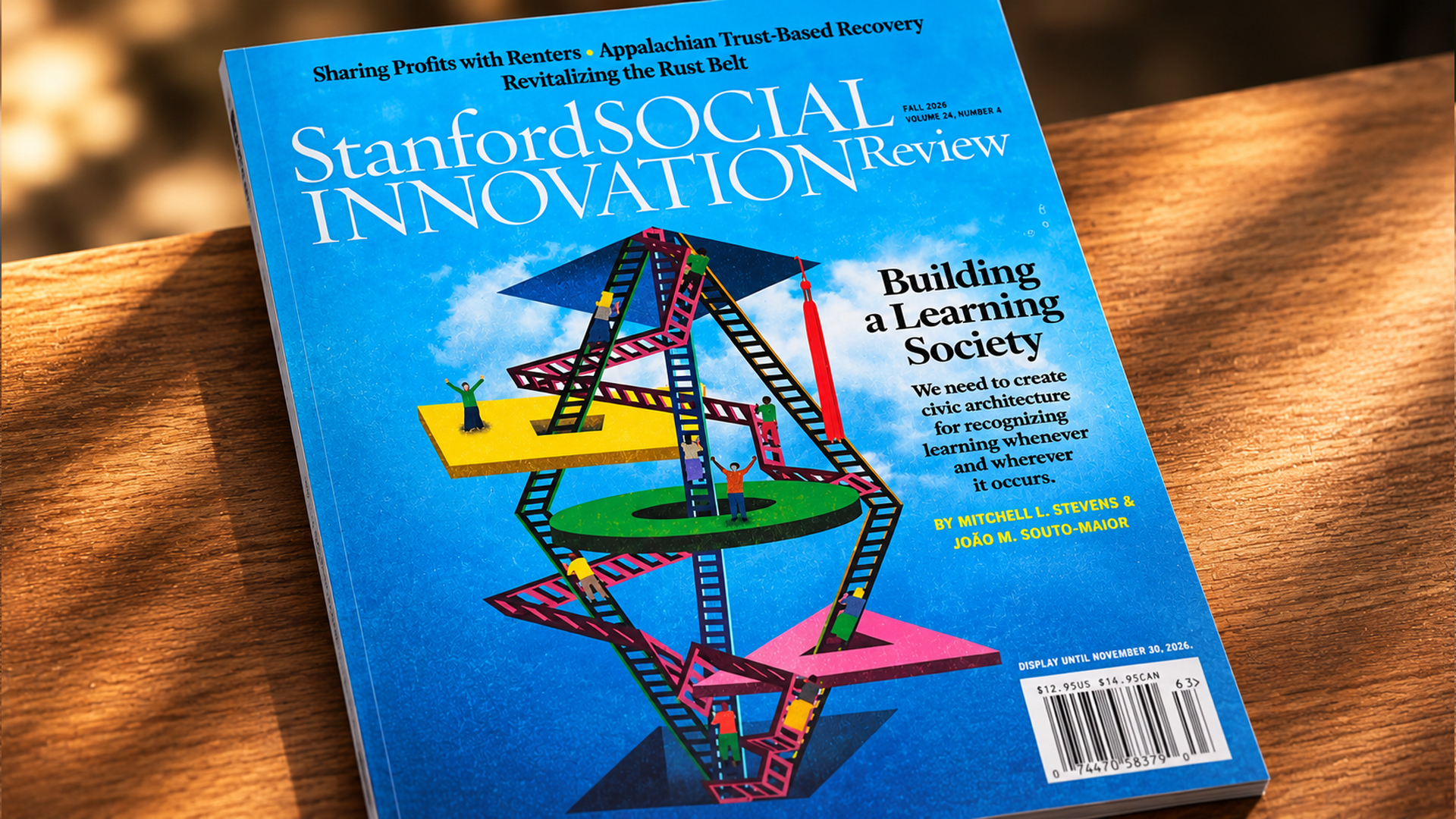
Their experiences are featured in “Building a Learning Society,” published in the Fall 2026 issue of Stanford Social Innovation Review (SSIR). Written by Stanford University professor Mitchell L. Stevens and Burning Glass Institute economist João M. Souto-Maior, the article examines the changing relationship between education and work through initiatives including Spero, developed at Wichita State University’s W. Frank Barton School of Business.
At the center of their argument is the emergence of a “learning society,” in which education is no longer confined to traditional degrees or a particular stage of life. Instead, learning becomes a continuing process, drawing on people’s experiences, capabilities, and changing aspirations.
Spero brings this vision into focus through the lives of people pursuing different futures.
Different Journeys, New Possibilities
Tiffany Conner, a graduate of Spero’s Career Readiness program, was working in a call center and struggling to make ends meet. Through the program, she developed professional capabilities that helped her secure a position at Cargill, with improved wages, benefits, and opportunities for advancement.
Estela Piedra followed a different path. After years of navigating family responsibilities and financial pressures, she joined Spero to pursue new professional possibilities. She subsequently secured a position at Koch, doubling her previous salary and opening a new chapter in her career.
For AJ Bohannon, the aspiration was entrepreneurial. Having explored several business ventures, he entered Spero seeking to strengthen his ability to build and grow a business. Through the Entrepreneurship program, he developed Shoe Castle, a footwear resale venture, while gaining knowledge and connections to advance his plans. His experience also renewed his commitment to higher education.
Their ambitions and starting points were different. Yet each found a way to build on existing experience and pursue a future that had previously seemed difficult to reach.
Their stories also reveal something important about the changing role of higher education. Learning does not always precede employment or entrepreneurship. Often, people return to education after years of working, raising families, building businesses, or navigating unexpected turns in their lives.
Spero responds to these different journeys with university-backed micro-credentials that recognize participants’ capabilities and signal them to employers, lending credibility that training alone may not provide.
“People come to us with experiences, responsibilities, and ambitions that don’t always fit the traditional path through higher education,” said Dr. Larisa Genin, Dean of the Barton School. “Universities need to adapt. Through Spero, we’re bringing academic resources together with employers and community partners to help people pursue new careers, build businesses, or continue their education. That’s the kind of work a university should be doing for its community.”
For Stevens, Spero connects to a larger shift in how learning is understood.
“We’ve long organized education around the idea that people go to school first and then enter working life,” said Stevens. “But people learn at work, change careers, raise families, and return to education with new purposes. Spero connects a university to that continuing process, helping people build on what they already know. That’s an important part of what we mean by a learning society.”
Hope for Better Futures
Spero takes its name from the Latin word for hope, reflecting a belief that a person’s future should not be determined solely by the opportunities available to them in the past.
But hope also requires something tangible: the knowledge, relationships, and opportunities that allow people to act on their aspirations.
For some, that means meaningful employment and greater financial security. For others, it means building a business, continuing their education, or pursuing possibilities they had not previously considered within reach.
The paths may differ, but the purpose remains the same: helping people build better futures and better lives.
To learn more about Spero, its programs, and opportunities to participate or support the initiative, visit wichita.edu/spero.