

Briana Rodriguez grew up in a home where Spanish was predominantly spoken. In trying to help Spanish-speaking relatives understand what was being said in English, she sometimes stumbled on the Spanish language’s nuances.
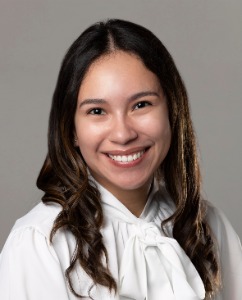
“There were times I had to interpret for my grandfather, and the feeling of being stuck while searching for the right word was very challenging,” Rodriguez, a senior double majoring in biological sciences and Spanish, said. “Those experiences motivated me to improve my Spanish.”
Her early life experiences influenced her decision to learn how to interpret. She believes these skills will help her when she is a dentist, so she is also working towards completion of the Spanish for the Professions certificate.
“I truly believe I have a responsibility to improve my Spanish so that I can better serve and care for Spanish-speaking patients in the future,” Rodriguez said.
Recent national surveys reflect the need for Spanish interpreters.
According to the Pew Research Center, 71% of U.S. Latinos ages 5 and older spoke English proficiently in 2024, an increase from 59% in 2000. The 2024 American Community Survey revealed that in Wichita, 13.7% of the population ages 5 or older could speak Spanish. Of that population, 60.6% responded that they spoke English “very well.”
Wichita State offers the Spanish for the Professions certificate to aid students who want to be able to translate or interpret skillfully, according to Julie Henderson, associate educator of Spanish and certificate coordinator. Many of the students who pursue the certificate need to develop more specific language skills and expertise for their future careers.
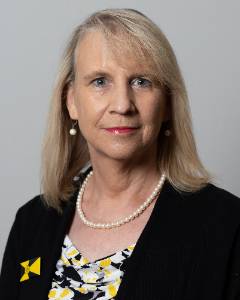
“Some of the students are interested in becoming interpreters, while others plan to use the language in their field of expertise. There is a large demand for qualified translators and interpreters,” Henderson said. “It is true that online translators have improved in recent years, but AI cannot be trusted to fully translate, and certainly not interpret, in all situations due to nuances, cultural aspects, and dialectical variations that machines do not yet recognize. People are still necessary in such sensitive areas as health and legal situations, when human lives may be affected, or even saved or lost, by the decisions made in translating and interpreting.
Rodriguez has been in several settings where she’s been able to do interpreting work, including dentistry.
“At my former job with Advanced Education in General Dentistry, I interpreted during dental exams and procedures, helping facilitate communication between providers and Spanish-speaking patients,” Rodriguez said. “One of my favorite experiences has been interpreting at Kansas Mission of Mercy, a weekend event where dental providers from across Kansas come together to offer free dental care. It brings together my passion for dentistry and service, especially in support of the Spanish-speaking community.“
Certificate students learn about using Spanish in medical, legal and business contexts, Henderson said, each of which requires a certain cultural understanding and different vocabulary.
Rodriguez has had her share of challenges and joys while interpreting for others. The challenges have pushed her to continue to improve her Spanish and expand her vocabulary.
“I often feel frustrated when I cannot immediately think of the right word in Spanish or when I realize that what I said may not be completely accurate, even though it was the best way I could express it in the moment,” she said. “Interpreting requires quick thinking and precision, and it can be difficult when you want to make sure both sides fully understand each other.
Henderson, a native speaker of English who worked for 20 years as a translator in Chile, agrees.
“Even speaking a language does not guarantee the ability to listen to one language and immediately or simultaneously produce the same idea in another,” Henderson said.
Rodriguez said her greatest joy is being able to help Spanish-speaking individuals. They are grateful, and she feels as though she is making a difference in someone else's life. She recalled one experience she had at the Kansas Mission of Mercy.
“At KMOM this year, I assisted a Spanish-speaking patient while she was having her teeth extracted. She was very frightened and in the middle of the procedure, she reached out and grabbed my hand,” Rodriguez said. “I spoke words of encouragement to her and stayed by her side, supporting her throughout the process. It meant a lot to me to know that speaking to her in her native language was able to bring her comfort and and help her receive the care she needed.”
Rodriguez realized that she has grown personally and learned about herself while interpreting for others.
“I have learned to think on my feet. There are many times when I don’t know a specific word in Spanish, so instead I try to describe the meaning in another way to make sure the message is still understood," Rodriguez said. “Through this experience, I have also learned to be patient with myself. As a student, I have realized that adopting a growth mindset is much more productive than being overly critical of myself when I make occasional mistakes. Language is something that is always evolving, and there will always be more to learn. I see that as a blessing and an opportunity to continue improving.”
Kierra Koeber, graduate student in communication, contributed to this article.