Explore recent news and updates from Wichita State University's Collaborative Literacy Education, Advancement and Research (CLEAR).
The Kansas State Department of Education (KSDE) and the Kansas Board of Regents (KBOR) in June to provide intensive literacy support for young students while preparing future educators.
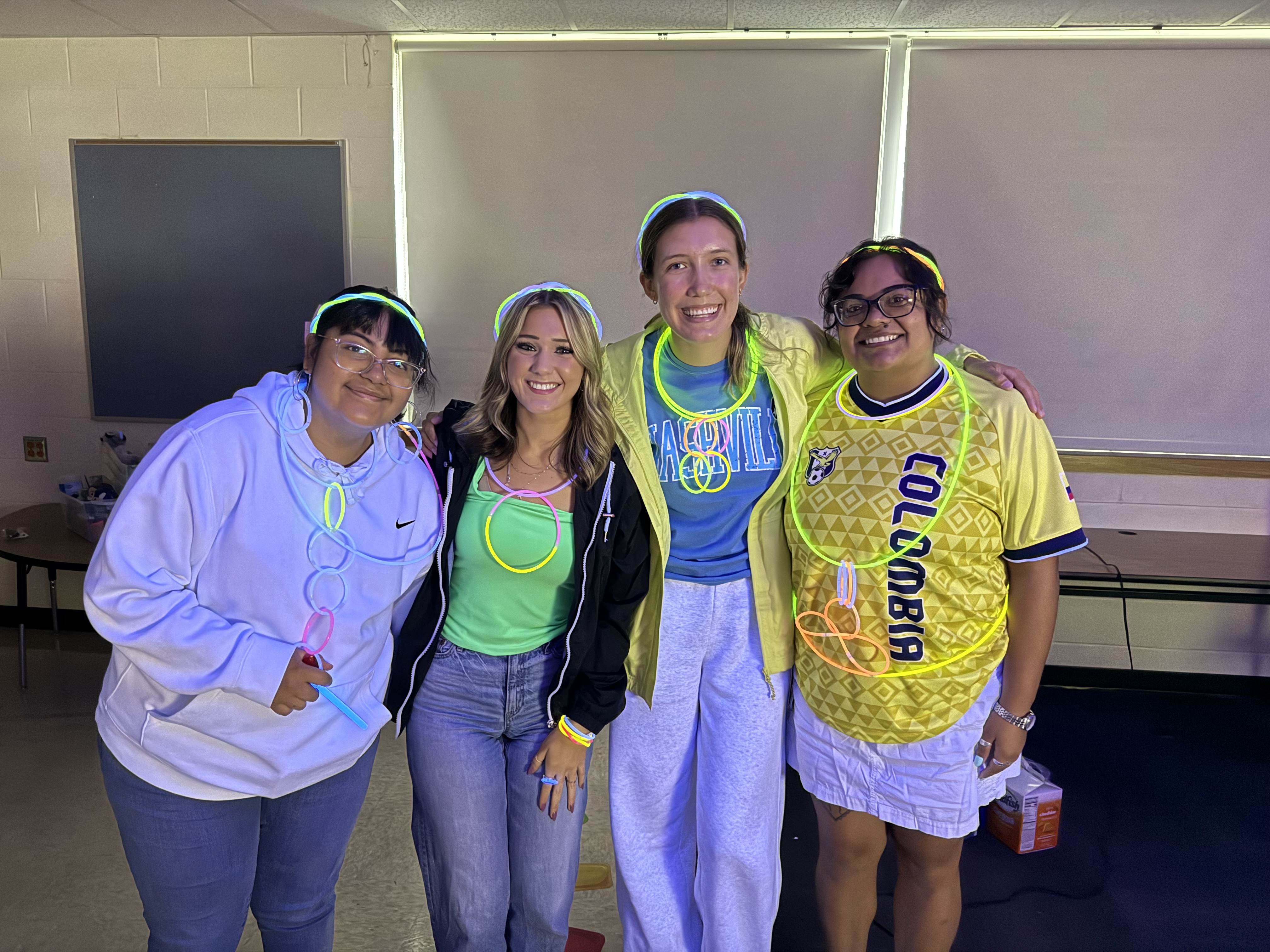
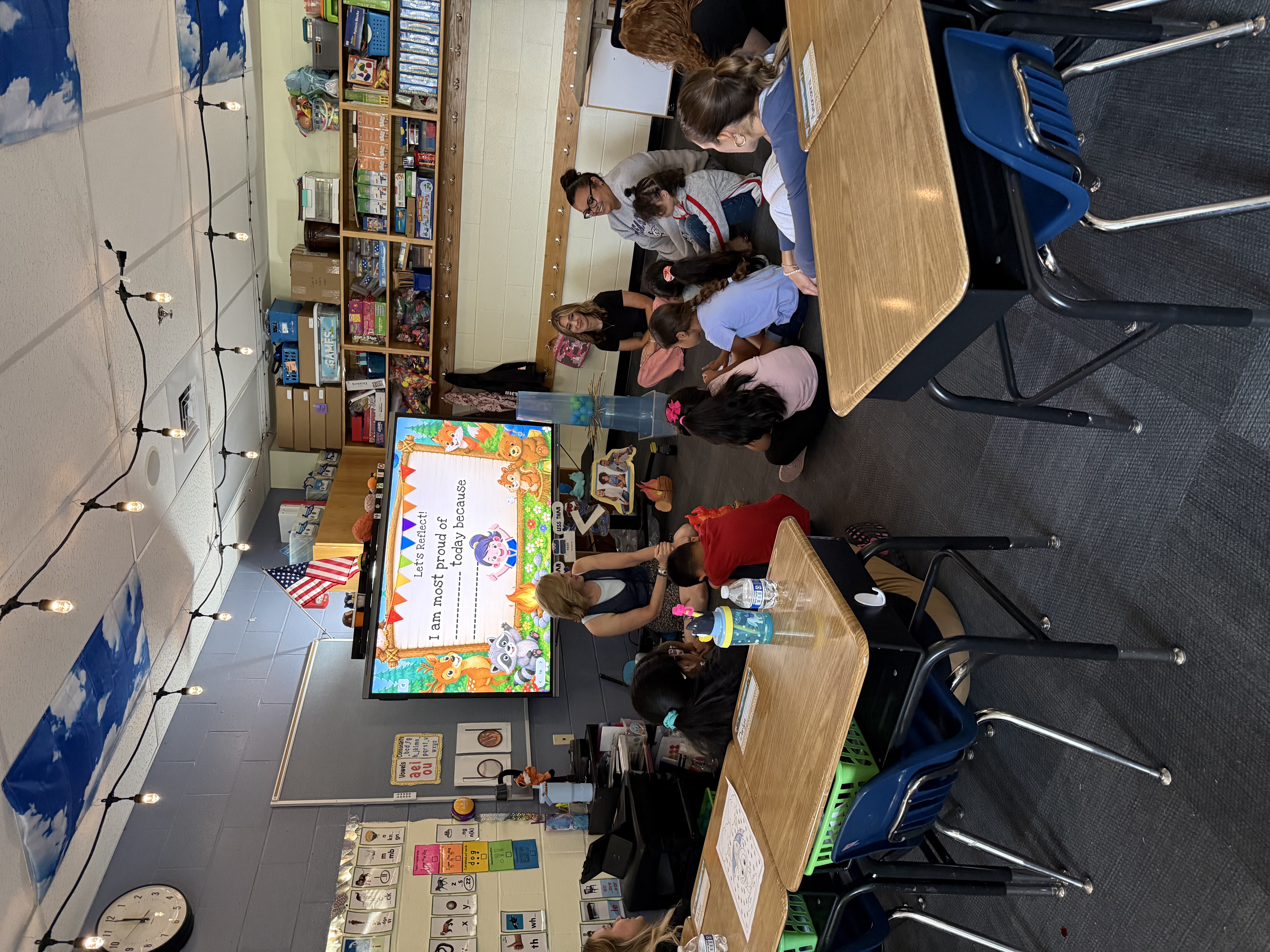
The summer literacy lab served kindergarten through second-grade students identified as needing intensive literacy support at Mueller, Spaght and Washington elementary schools. Students received targeted, evidence-based structured literacy instruction aligned with the Kansas Blueprint for Literacy.
A total of 27 WSU teacher education candidates participated through paid applied learning experiences. Under the supervision of WSU faculty and classroom teachers, the candidates gained hands-on experience delivering science of reading instruction and supporting young readers.
Wichita Collective Impact and WSU’s Public Policy and Management Center (PPMC) also supported the program’s planning and implementation.
According to Dr. Kim Moody, director of CLEAR, the literacy lab demonstrates how universities, school districts and state agencies can work together to support children’s literacy development while strengthening educator preparation and expanding Kansas’ literacy workforce.
Moody said the initiative also offers a model that could be expanded and replicated as Kansas continues implementing the Kansas Blueprint for Literacy.
Wichita State University’s Collaborative Literacy Education, Advancement and Research (CLEAR) center and the Kansas Mentor and Induction Center (KMIC) are collaborating to develop a statewide initiative focused on coaching, mentoring and educator support.
The initiative will connect CLEAR’s literacy expertise with KMIC’s work in mentorship, leadership development and professional growth. Planned areas of support include instructional coaching, mentoring, literacy leadership and systems development for Kansas schools and districts.
According to Dr. Kim Moody, director of CLEAR, and Dr. Shirley Lefever, assistant director of KMIC, the collaboration is designed to strengthen instructional practice while helping schools build systems that support educators throughout their careers. They say that by aligning literacy implementation with coaching and mentoring, the centers aim to strengthen teacher effectiveness, improve educator retention and support student outcomes across Kansas.
Wichita State University’s Collaborative Literacy Education, Advancement and Research (CLEAR) hosted five family literacy nights during the 2025-26 academic year in partnership with Wichita Public Schools (USD 259), Wichita Collective Impact and WSU’s Public Policy and Management Center (PPMC).
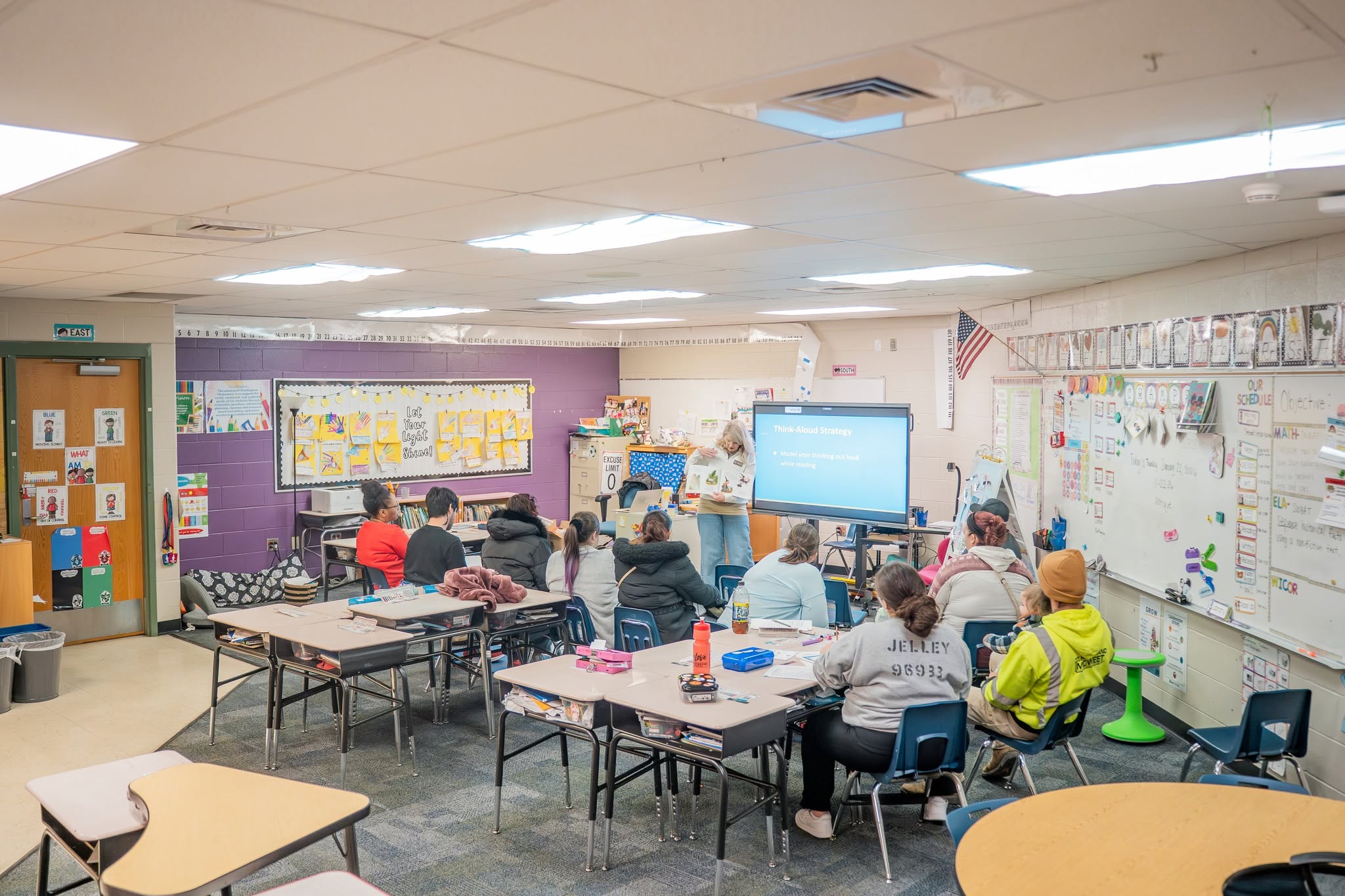
Held at partner elementary schools, the interactive events brought students, families and educators together for hands-on literacy activities. Families received practical strategies and resources they could continue using to support reading at home.
The events were designed to strengthen home-school partnerships and make evidence-based literacy practices more accessible to families. Activities provided caregivers with opportunities to learn strategies they could incorporate into everyday reading and language routines with their children.
“Family engagement is one of the strongest predictors of children’s literacy success,” said Dr. Kim Moody, director of CLEAR. “These events empower families with evidence-based literacy strategies and resources.”
The collaboration allowed CLEAR, USD 259, Wichita Collective Impact and PPMC to coordinate family engagement efforts at participating schools. Additional family literacy nights are planned for the upcoming academic year.
Working alongside Wichita Collective Impact, WSU’s Public Policy and Management Center (PPMC) and USD 259, CLEAR is helping coordinate literacy efforts across education and community organizations.
The partnership uses a collective impact model to bring together higher education, K-12 schools, nonprofit organizations and state agencies around a shared goal of improving literacy outcomes for Kansas students.
Through the collaboration, partners are working to align educator preparation, applied learning, family engagement, literacy intervention and workforce development rather than addressing each area through separate efforts.
Dr. Kim Moody, director of CLEAR, says the center’s work is strengthened by collaboration with Wichita Collective Impact, PPMC, USD 259 and other community organizations, noting that the partnership is helping create a coordinated literacy ecosystem that strengthens educator preparation while expanding opportunities for children and families across Kansas.
To help strengthen Kansas’ literacy workforce, Wichita State University’s Collaborative Literacy Education, Advancement and Research (CLEAR) center has developed professional learning opportunities aligned with the Kansas Blueprint for Literacy and the science of reading.
The offerings include Foundations of the Science of Reading courses, a paraeducator series, trusted microcredentials and preparation for the Kansas Seal of Literacy. The programs serve paraeducators, in-service teachers and preservice teachers across the state.
A total of 168 in-service teachers have completed Foundations of the Science of Reading I and II, with 100 additional seats planned for the upcoming year.
Among paraeducators, 26 have completed the paraeducator series and 20 are enrolled this summer. CLEAR plans to offer 100 seats in the program next year.
Preservice teachers also have opportunities to demonstrate their preparation through the Kansas Seal of Literacy. A total of 125 students earned the seal in fall 2025, followed by 43 additional students in spring 2026.
CLEAR’s credentialing work also includes the second 1EdTech Trusted Microcredential in the United States.
Dr. Kim Moody, director of CLEAR, says the programs are designed to expand educator capacity and prepare more teachers and paraeducators to deliver structured literacy instruction in Kansas classrooms. She says the combination of professional learning and stackable credentials equips educators with evidence-based instructional practices to better support students across the state.
- Educators earn the Kansas Seal of Literacy through the Foundations Science of Reading courses - now offering scholarships for tution support and stipend for completion!
- Paraeducators - Structured Literacy courses - now offering scholarships for tuition support and stipend for completion!
Reading Specialist Licensure Program - Now offering scholarships for tuition support!