MyShockerHealth Newsletter • Issue 17 • June 8, 2026
Welcome to the myShockerHealth newsletter!
May caught up with us fast in Student Health Services! We celebrated Nurses Week,
our SHS student employees and finally the 2026 May graduates! The combo May/June newsletter
has numerous topics and I am sure you will see one that grabs your attention.
May was American Stroke Awareness Month, US Food & Drug has great information on food
labels, perimenopause and a "Women's Health Starts with Nutrition" article by our
own SHS feature writer, Dr. Belinda Werth, DNP, APRN. Stay connected and let us know
of any health education topics or info you would like us to highlight by emailing
student.health@wichita.edu.
Links to the most current newsletter will be posted through WSU newsletters, social
media, and our website, wichita.edu/shs. Enjoy!
For content requests: student.health@wichita.edu
American Stroke Awareness Month
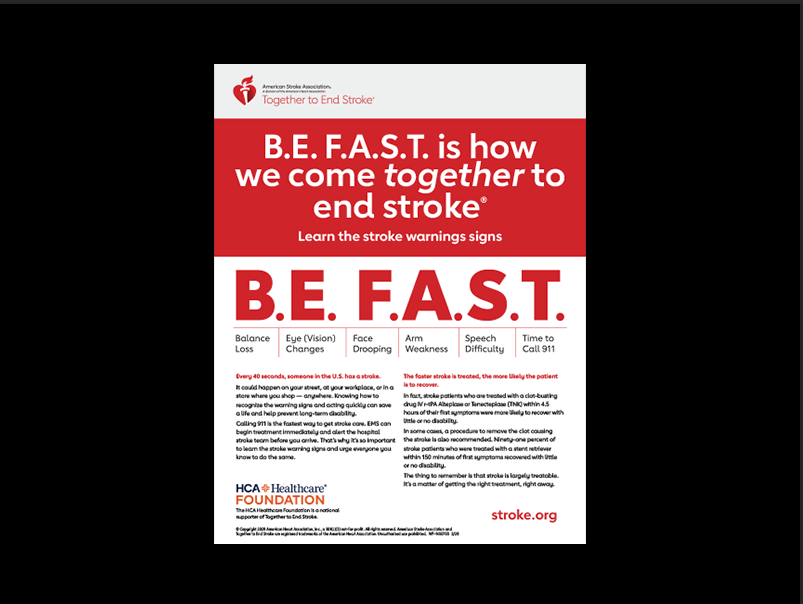
Do you know the signs of a stroke? One in 5 women will have a stroke and roughly 1
in 6 men! Take action faster and learn to recognize early warning signs by using American
Heart Association's program, B.E. F.A.S.T. Many risk factors for strokes can be prevented to decrease risk of having another
one. (American Heart Association)
How to Interpret Food Labels
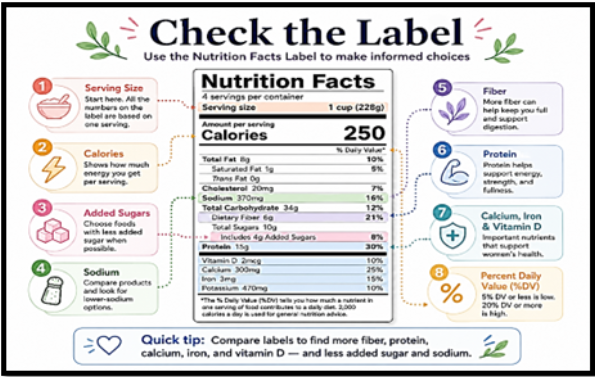
Do you ever look at Nutrition Facts on product labels and wonder what it all really
means? It is all based on the Serving Size and the nutritional content of EACH SERVING.
If you eat more than one serving, you are getting more than the Food Label indicates.
The U.S. Food & Drug has a great explanation of food labels so that you can make quick and informed food decisions for a healthier diet.
Check out this Interactive Nutrition Facts Label page from the FDA!
Women's Health Starts with Nutrition
By Belinda Werth, DNP, APRN-C
Good nutrition plays an important role in women’s health at every stage of life. The
foods we choose can support energy, mood, focus, bone health, heart health, and overall
wellness.
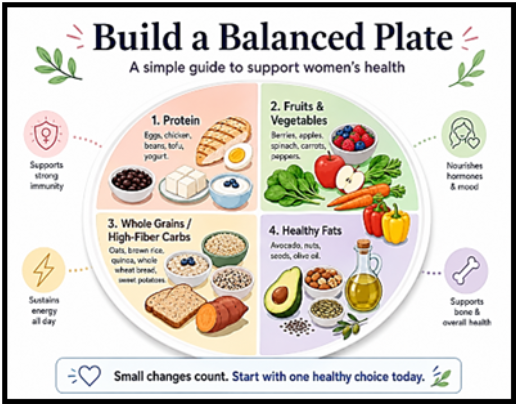
Healthy eating does not have to be complicated. A simple place to start is by building
a balanced plate. Try including a source of protein, fruits or vegetables, whole grains
or high-fiber carbohydrates, and healthy fats at meals when possible.
Important nutrients for women include iron, calcium, vitamin D, folate, fiber, and
protein. These nutrients help support strong bones, healthy blood, steady energy,
and normal body function.
Small changes can make a big difference over time.
Consider adding protein to breakfast, choosing a fruit or vegetable with meals, drinking
more water, or checking the Nutrition Facts Label when selecting packaged foods.
Nutrition is not about being perfect.
It is about fueling your body in a way that helps you feel and function your best.
Learn more: Visit the FDA Office of Women’s Health National Women’s Health Week resources and try the FDA Interactive Nutrition Facts Label.
Perimenopause: What is it?
Are you in your 40's? Hormonal unrest and discomfort can begin in your 40's and could
indicate the start of perimenopause which lasts about 4 years. Then, menopause fully
sets in. The experience can be different for all women and can start at various times
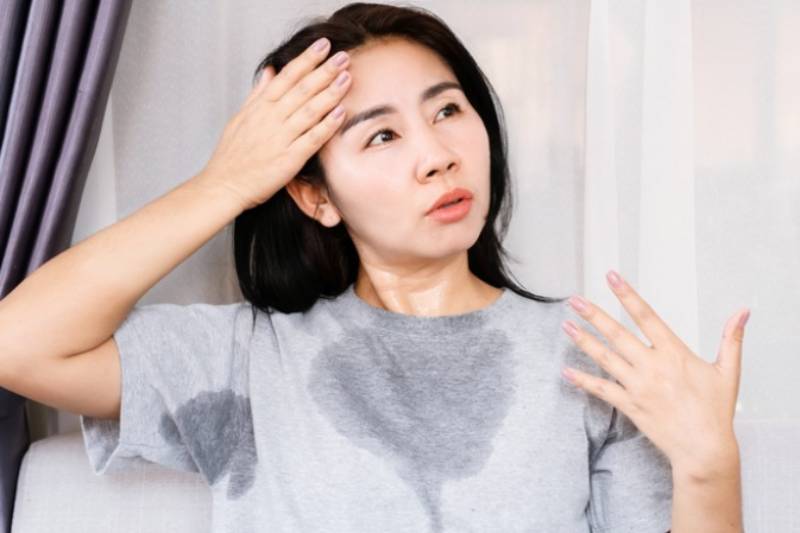
in the life-cycle, completely unpredictable and crazy! Symptoms such as sleep disturbances,
short-term memory loss, trouble focusing, night swears and hot flashes can all indicate
fluctuations in estrogen levels. Learn more about how these symptoms can be improved with diet and exercise. (Medical News Today)
How to Use Eyedrops
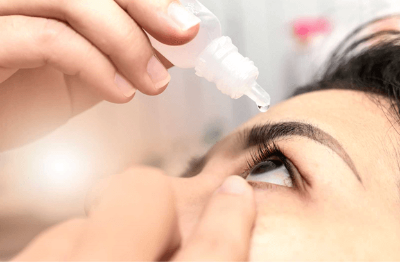
If you use eyedrops regularly, are you aware of the proper technique and steps to
apply? CLEAN HANDS are the number 1 factor. You should also use an eye solution BEFORE
you also apply an eye suspension. And, use eye drops before eye ointments! There are
also gadgets you can purchase to help hold your eye open while you administer the
drops! Learn about the important do's and don't of applying eyedrops. (Healthline)
CDC Issues Travel Warning due to Ebola
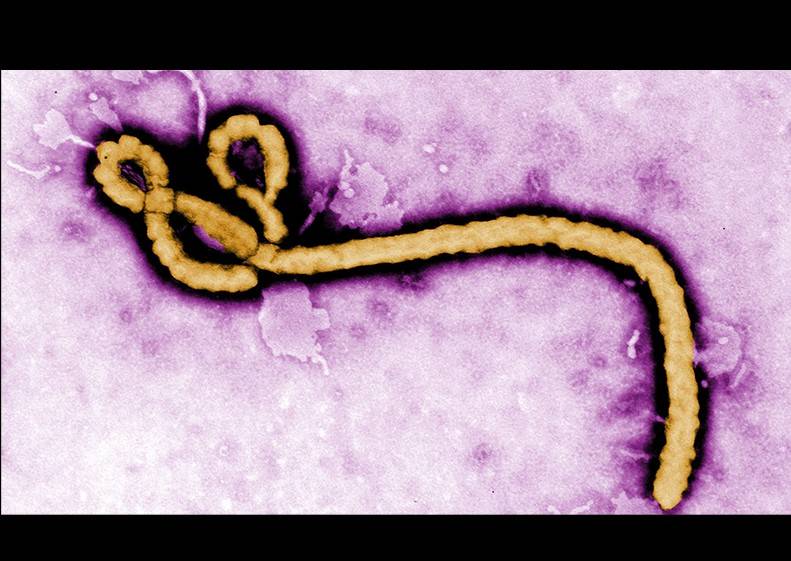
The CDC is monitoring an outbreak of Ebola disease in remote areas of the Democratic
Republic of the Congo and Uganda and have implemented travel restrictions to these
areas. To date, no cases of Ebola disease have been confirmed in the US, keeping the
overall risk to the American public and travelers low. What is Ebola and why is it
such a dangerous disease? Ebola is a virus that spreads through contact with the body
fluids of an infected person, and rarely, through contact with an infected animal.
Symptoms can start with fever, aches, fatigue and progress into diarrhea, vomiting
and unexplained bleeding. The CDC's Ebola site has more information on the current status and travel guidance. (CDC)
Employee Corner:
Healthquest Points:
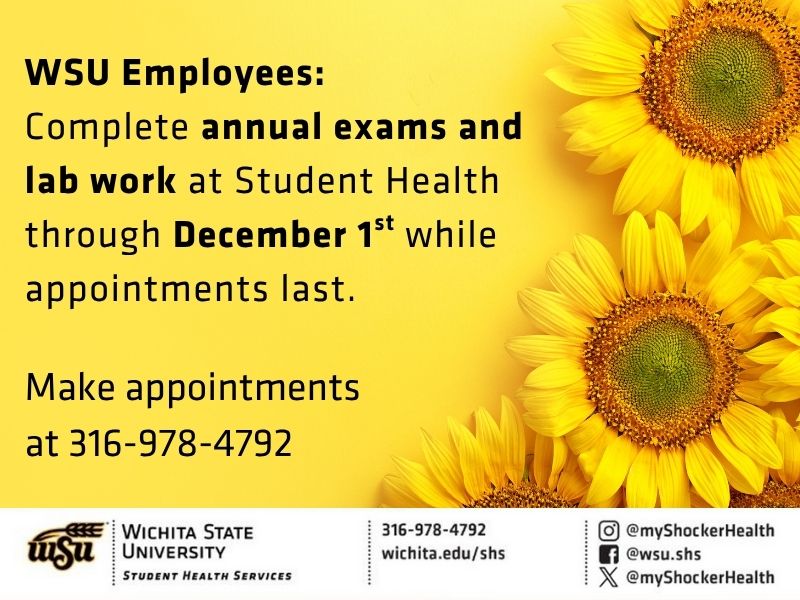
Don't forget this summer to complete your HealthQuest insurance discount points. Student Health Services can complete the physical and
laboratory screenings for you! Call (316) 978-4792 today!
Passport to Wellness: Staying Healthy While Traveling
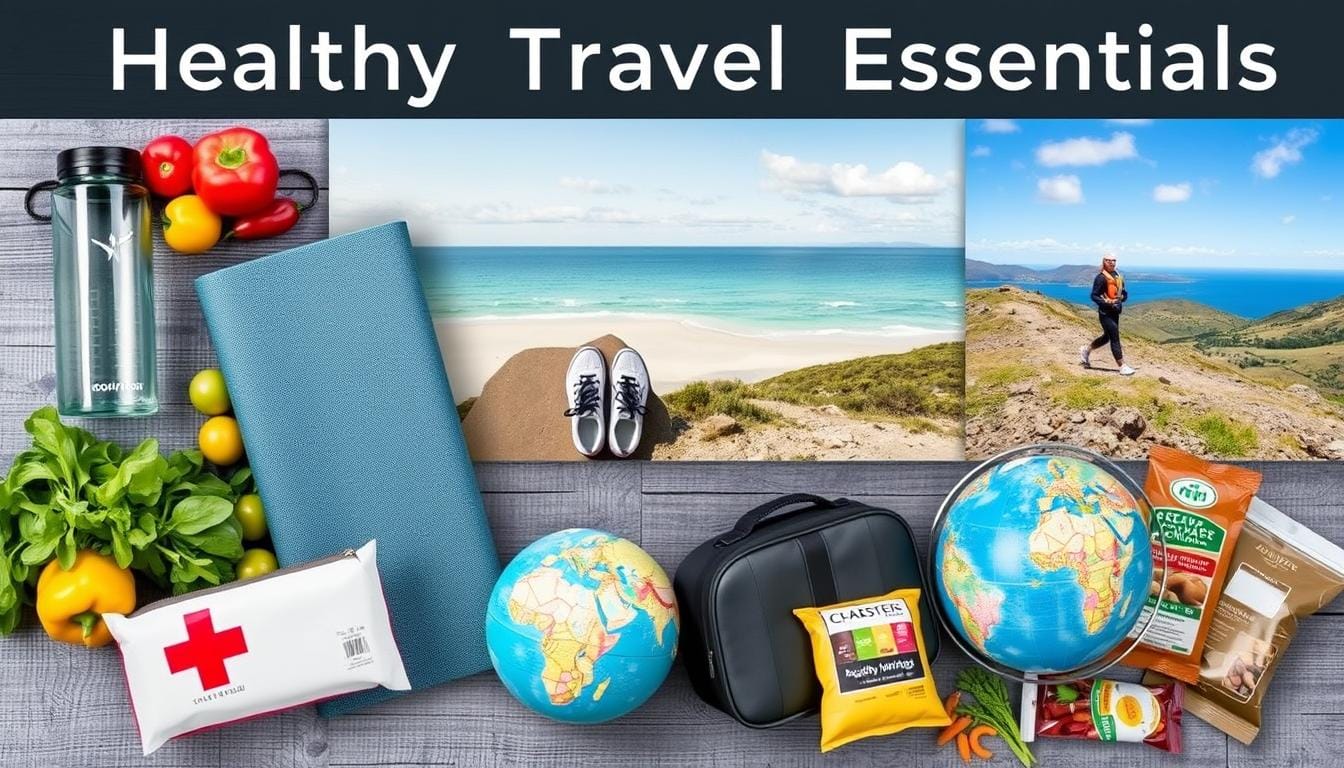
HealthQuest offers an overview of current guidelines on travel-related illnesses. They cover
topics like malaria, yellow fever, recommended vaccines, and country-specific health
risks to help you prepare for sage and healthy travels. You can view the recording
by following the instructions on how to access the webinar directly on the HealthQuest
Portal under Wellness Learning Events.