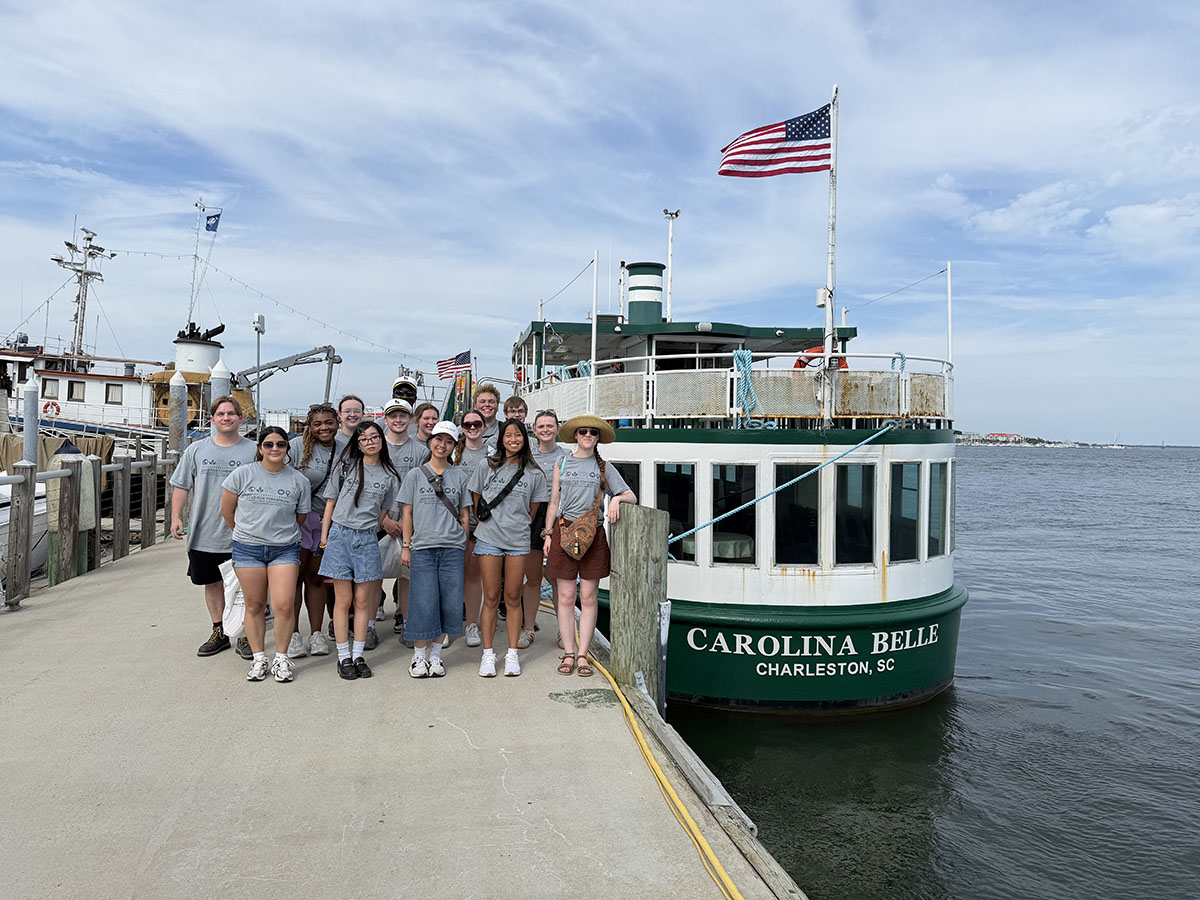
A Wichita State University summer leadership course took 15 students from Kansas to South Carolina, where they utilized design thinking, contemporary research and scholarship to make a meaningful difference with local nonprofits.
WSU’s Dorothy and Bill Cohen Honors College’s Lead for Tomorrow course tackled real-world challenges from Wichita nonprofits: Wichita Clean Streams, Wichita-Sedgwick County Historical Museum and the Pando Initiative through a traveling leadership academy experience.
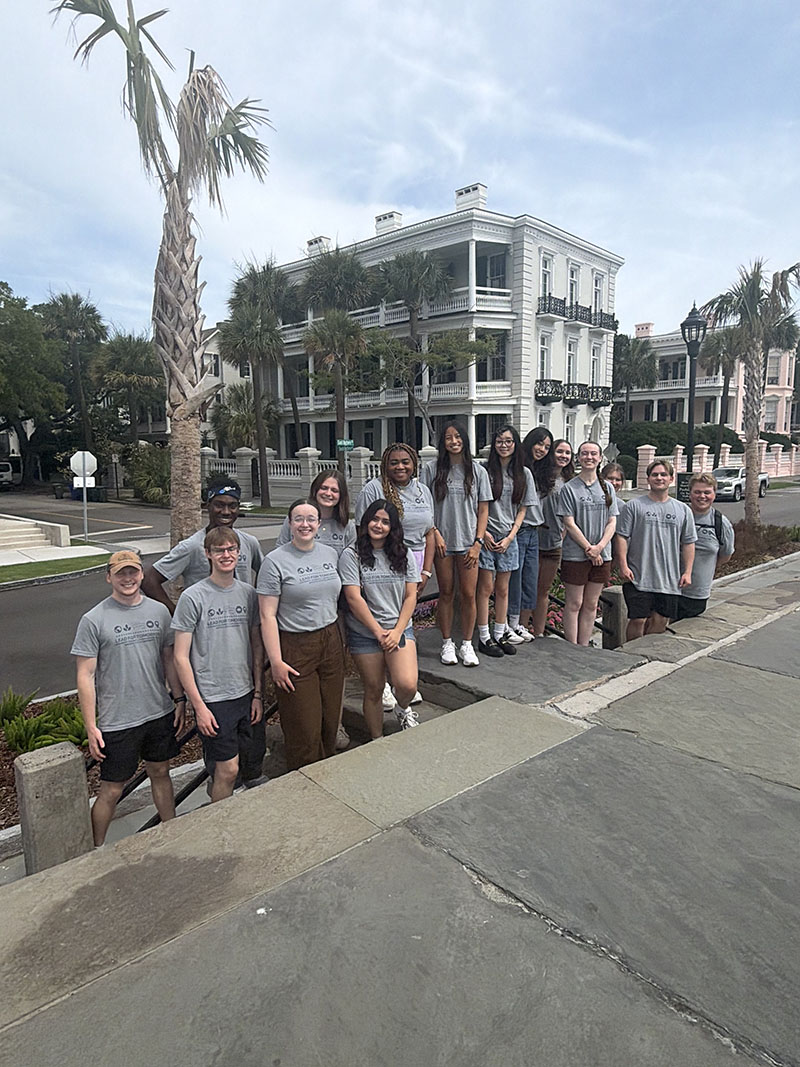
The Leadership Academy, part of the original Cohen gift, engages students in contemporary research and scholarship based on an annual theme. For the 2026 theme, “Currents, Waves & Tides: Leadership in Motion,” students participated in a Place as Text travel experience in Charleston, South Carolina.
In Charleston, WSU students learned from area nonprofit organizations: Charleston Waterkeeper, Kids on Point and The Charleston Museum.
senior in product design and manufacturing engineering
After their Charleston experience, students presented innovative recommendations, including strategies for educational and engagement efforts with the Arkansas River, increasing awareness and visitation for a local museum, and differentiating youth-serving organizations to bolster new donor engagement.
"I discovered that I learn a lot better when I'm actually inside an experience instead of just reading about it,” said Arely Molina, a junior in biomedical engineering from Liberal, Kansas, and a Cohen Honors College student. “Being in Charleston, walking through the neighborhoods, visiting Kids on Point and building relationships with my team all of it taught me things I don't think I could have gotten from a classroom alone.”
Molina said Lead for Tomorrow changed how she thought about leadership.
“Before this course I thought of leadership mostly as being the person in charge or having the loudest voice in the room, but this course changed that,” she said. “Working on the Pando Initiative taught me that real leadership is about listening first and showing up consistently for the people you're trying to serve.”
Fifteen Wichita State students representing four colleges across the university, completed the course, which was led by Dr. Chelsea Redger-Marquardt, assistant dean of the Cohen Honors College and assistant professor of sport and leadership studies; Dr. Bobby Berry, assistant dean for student experience in the College of Education and assistant professor of sport management; Dr. Cindi Mason, associate teaching professor and undergraduate coordinator in industrial, systems, and manufacturing engineering for the College of Engineering; and Dr. Samantha Slade, director of clinical training and associate professor of psychology for the Fairmount College of Liberal Arts and Sciences.
Wichita State senior Elijah Allen said the entire experience brought about a meaningful sense of purpose.
“Travel heightens awareness like nothing else can, and new environments create a whole new level of perspective that you will struggle to get by analysis alone,” said Allen, who is majoring in product design and manufacturing engineering and is a Cohen Honors College student from Wichita. “You can sit in a room your entire life reading textbook after textbook on metallurgy until you grasp all of the technical knowledge, but until you fire up a forge and experience it firsthand, you will never have the whole picture.”
More than 130 hours were spent in direct engagement with the Charleston community partners through the Lead for Tomorrow program, contributing to global academic exchange and community development. Students provided Wichita community partners with consultation services equaling an estimated economic impact of more than $20,000.
About Wichita State University
Wichita State University is Kansas' only urban public research university, enrolling more than 25,000 students between its main campus and the WSU Campus of Applied Sciences and Technology (WSU Tech), including students from every state in the U.S. and more than 100 countries. Wichita State and WSU Tech are recognized for being student-centered and innovation-driven.
Located in the largest city in the state with one of the highest concentrations in the United States of jobs involving science, technology, engineering and math (STEM), Wichita State University provides uniquely distinctive and innovative pathways of applied learning, applied research and career opportunities for all of our students. The National Science Foundation ranked WSU No. 1 in the nation for aerospace engineering R&D, No. 2 for industry- and defense-funded engineering R&D and No. 9 overall for engineering R&D.
The Innovation Campus, which is a physical extension of the Wichita State University main campus, is one of the nation’s largest and fastest-growing research/innovation parks, encompassing over 120 acres and is home to a number of global companies and organizations.
Follow Wichita State on social media: