The interview was off to a rocky start. Or at least the Zoom connection was.
While I was troubleshooting frozen screens and audio glitches, Kevin Kelly had already shifted into problem-solving mode. He suggested alternatives, tested possibilities and methodically worked through solutions.
Within minutes, the issue was resolved.
It was a fitting introduction to an engineer whose career has been defined by curiosity and a relentless pursuit of answers.
“A typical day ends in ‘why?’” said Kelly, research manager at Wichita State University's National Institute for Aviation Research (NIAR). “That's about all that each day has in common.”
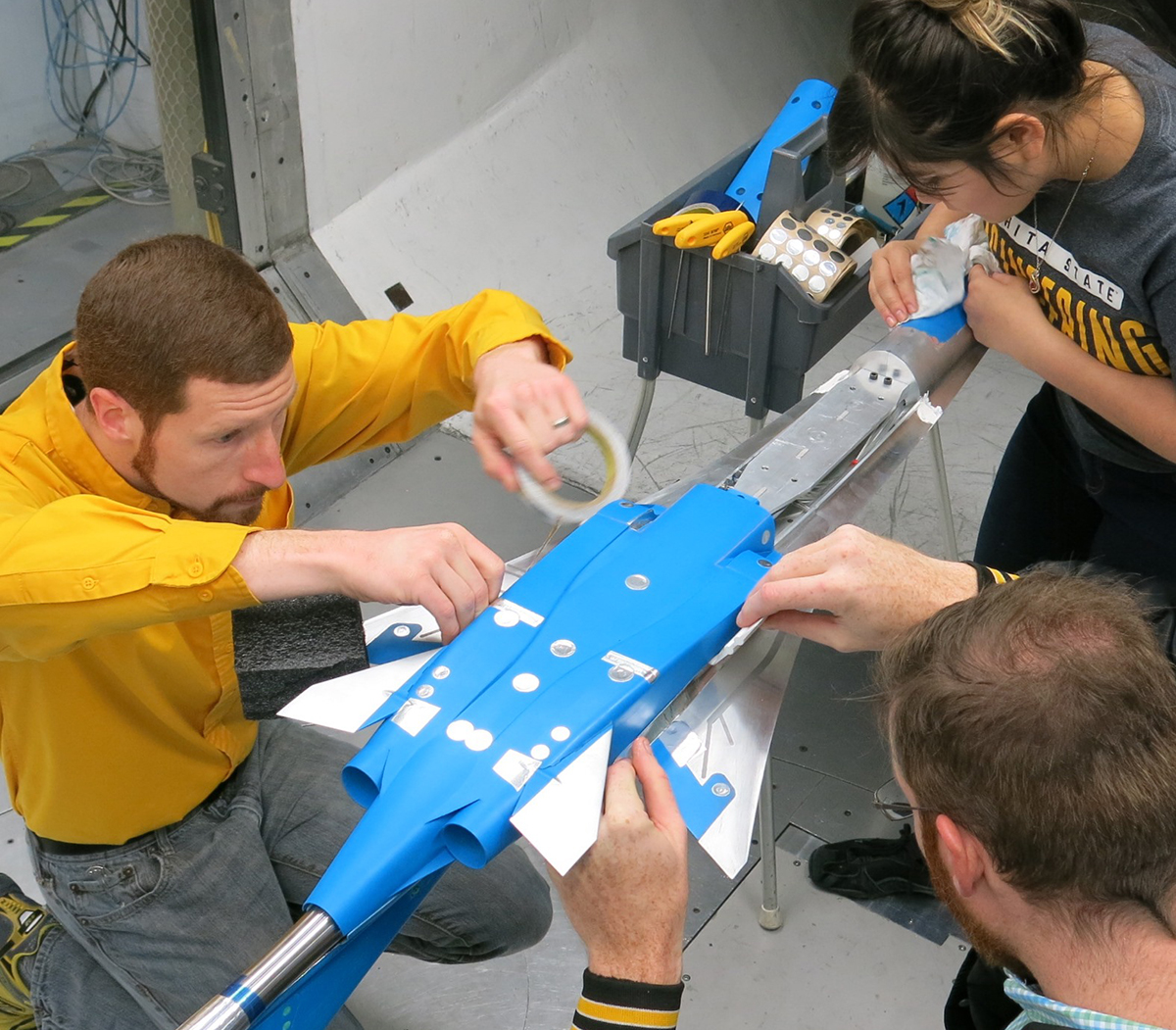
For more than 20 years, Kelly has been asking that question at WSU's Walter H. Beech Wind Tunnel, where he has grown from a student worker into one of the facility's leaders.
Finding his path
Growing up in Wichita, Kelly enjoyed math and science but wasn't sure where they would lead. After graduating from Wichita Heights High School in 2005, he earned the Wallace Scholarship and enrolled at Wichita State to study aerospace engineering.
A conversation with aerospace engineering chair Scott Miller helped steer him toward opportunities in his field, eventually leading him to NIAR.
At the time, Kelly knew little about the wind tunnel.
“I wasn't sure what any of these labs did,” he said. “And it turned out that what the wind tunnel folks were doing seemed so cool.”
He joined as an undergraduate student assistant and quickly found an environment where learning and experimentation were encouraged.
“John took me under his wing,” Kelly said of wind tunnel director John Laffen. “He
took a risk on me.”
Kelly admits he arrived with more enthusiasm than experience.
“I was completely naive,” he said. “I only knew what I was supposed to wear and when I was supposed to get to what place. I needed a lot of handholding.”
Laffen remembers a bright but inexperienced freshman.
“Yes, he was very green,” Laffen said. “We had to teach him, and he had to learn about using small tools, working with his hands. He picked that up very quickly. He has always been a hard worker,” Laffen said.
An unexpected opportunity
As Kelly prepared to graduate in 2009, the Great Recession disrupted his plans.
Like his father and brother before him, he expected to build a career in aircraft manufacturing, and he was excited when he received a job offer.
Then the offer was withdrawn.
“What really helped, though, was a heart-to-heart conversation with John,” Kelly said.
Laffen suggested graduate school, an idea Kelly had spent years resisting.
“My goal was to start my career,” Kelly said. “More school sounded very unappealing.”
Eventually, he reconsidered.
That decision led him to earn a Master of Science in Aerospace Engineering in 2013 and continue advancing through the ranks at NIAR.
“Kevin is very bright,” Laffen said. “He did a great job, and his work is directly applied to what we do here in the wind tunnel nearly every day.”
More recently, Kelly added an executive MBA from Wichita State's Barton School of Business, a move he sees as a natural extension of his growing leadership responsibilities.
Engineering is about people.
Although his career has centered on engineering, Kelly says understanding people has become just as important as understanding technology.
“I enjoyed training people. I enjoyed mentoring new engineers,” he said.
That interest extends to customers as well.
“I realized that it was a vulnerable exchange where our customers really needed to trust us and take a leap of faith,” he said. “They're staking a lot of their career ambitions on the results they're going to get from our lab.”
Laffen believes that combination of technical expertise, leadership and business knowledge positions Kelly well for the future.
From college lab to world-class
Kelly's career has paralleled the transformation of the wind tunnel itself.
“When I started at the wind tunnel, it was still in a transition phase, moving from a college lab to a professional setting,” he said.
Today, the facility conducts testing on everything from aerospace products and vehicles to tents, trash cans and sports equipment, and even human athletes.
Despite advances in computer modeling, Kelly believes there is still tremendous value in physical testing.
“There are things that computers can't analyze and simulate, at least not efficiently and believably yet,” he said. “There's something about really feeling and seeing it that customers really like.”
Over the years, Laffen has come to appreciate just how essential Kelly has become to the operation.
“I've lost count of the Appreciate Kevin weeks I've experienced over the years,” he said. But his admiration extends beyond Kelly's technical contributions.
“His greatest contribution, however, is that he is my very good friend and one of the main reasons I love my job.”
Still asking questions
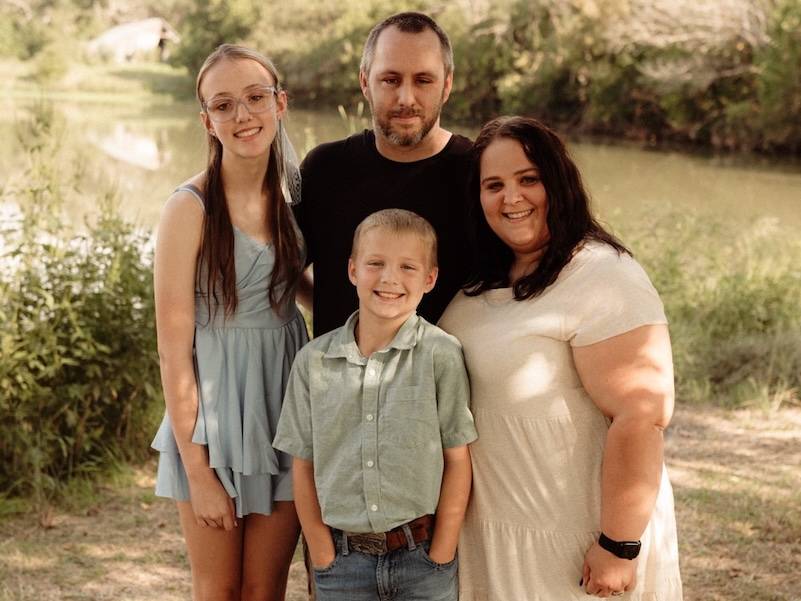
Today, Kelly and his wife are raising four children. At work, his curiosity remains unchanged.
“Even when I eventually retire from this job, I'll never fully understand aerodynamics. I'll always have questions,” he said. “It will always intrigue me.”
For a researcher whose days still end with "why," that might be exactly the point.
About Wichita State University
Wichita State University is Kansas' only urban public research university, enrolling more than 24,000 students between its main campus and the WSU Campus of Applied Sciences and Technology (WSU Tech), including students from every state in the U.S. and more than 100 countries. Wichita State and WSU Tech are recognized for being student-centered and innovation-driven.
Located in the largest city in the state with one of the highest concentrations in the United States of jobs involving science, technology, engineering and math (STEM), Wichita State University provides uniquely distinctive and innovative pathways of applied learning, applied research and career opportunities for all of our students. The National Science Foundation ranked WSU No. 1 in the nation for aerospace engineering R&D, No. 2 for industry- and defense-funded engineering R&D and No. 9 overall for engineering R&D.
The Innovation Campus, which is a physical extension of the Wichita State University main campus, is one of the nation’s largest and fastest-growing research/innovation parks, encompassing over 120 acres and is home to a number of global companies and organizations.
Follow Wichita State on social media: