Meet our Team

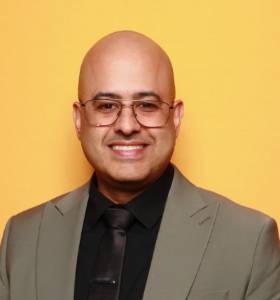
Samuel Paunetto MDiv, LMSW. is our Project Director, he is a bilingual licensed master social worker. He received
a bachelor degree in General Sociology from Inter American University of Puerto Rico,
a Master degree in Divinity from the Evangelical Seminary of Puerto Rico, and a Master
degree in Social Work from Wichita State University. He is an adjunct professor at
the WSU School of Social Work and a member of the Think Tank at the Kansas Health
Foundation. He is also the Founder & Executive Director of Podemos, a non-profit dedicated
to expanding mental health services in the local Hispanic community. In addition,
Samuel is the author of the UPSTREAM curriculum, a cultural competence, and anti-racism
training program for healthcare professionals.

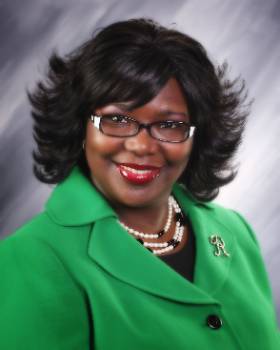
Rhonda K. Lewis, Ph.D., MPH. is a Professor, Graduate Coordinator, and immediate past Chair of the Psychology department
at Wichita State University. She received her Ph.D. in Developmental and Child Psychology
from the University of Kansas and her Master of Public Health from the University
of Kansas School of Medicine. She is the Director of the Behavioral Community Research
and Action Team (BCRAT), at Wichita State University. The research team focuses on
building the capacity of community-based organizations, using ecological and strengths-based
approaches to make community change. She is the PI of Keeping ICT SAFE (Substance
Abuse Prevention Focusing on Empowerment) a grant funded by the Substance Abuse Mental
Health Services Administration, she is one of the Co-PI’s for WSU’s the NSF Advance
Adaptation grant to recruit and retain more Women and Underrepresented Minorities
into the University and she serves as Co-PI for the Department of Corrections with
Sedgwick County. She is a Service-Learning Faculty Fellow and a Culturally Responsive
evaluation expert. She is a community-engaged researcher who investigates educational
inequities, health equity, positive youth development and mental health, substance-use
prevention and health promotion in the community. She is a member of the Society for
Community Research and Action for Division 27 of APA, is a SCRA Division 27 Fellow,
and a member of the SCRA’s Research Council. She is a member of the Association of
Black Psychologists, is a member of the American Evaluation Association, and is a
proud member of Delta Sigma Theta Sorority, Inc. Currently, she is the President of
the Kansas Association of Black Psychology.
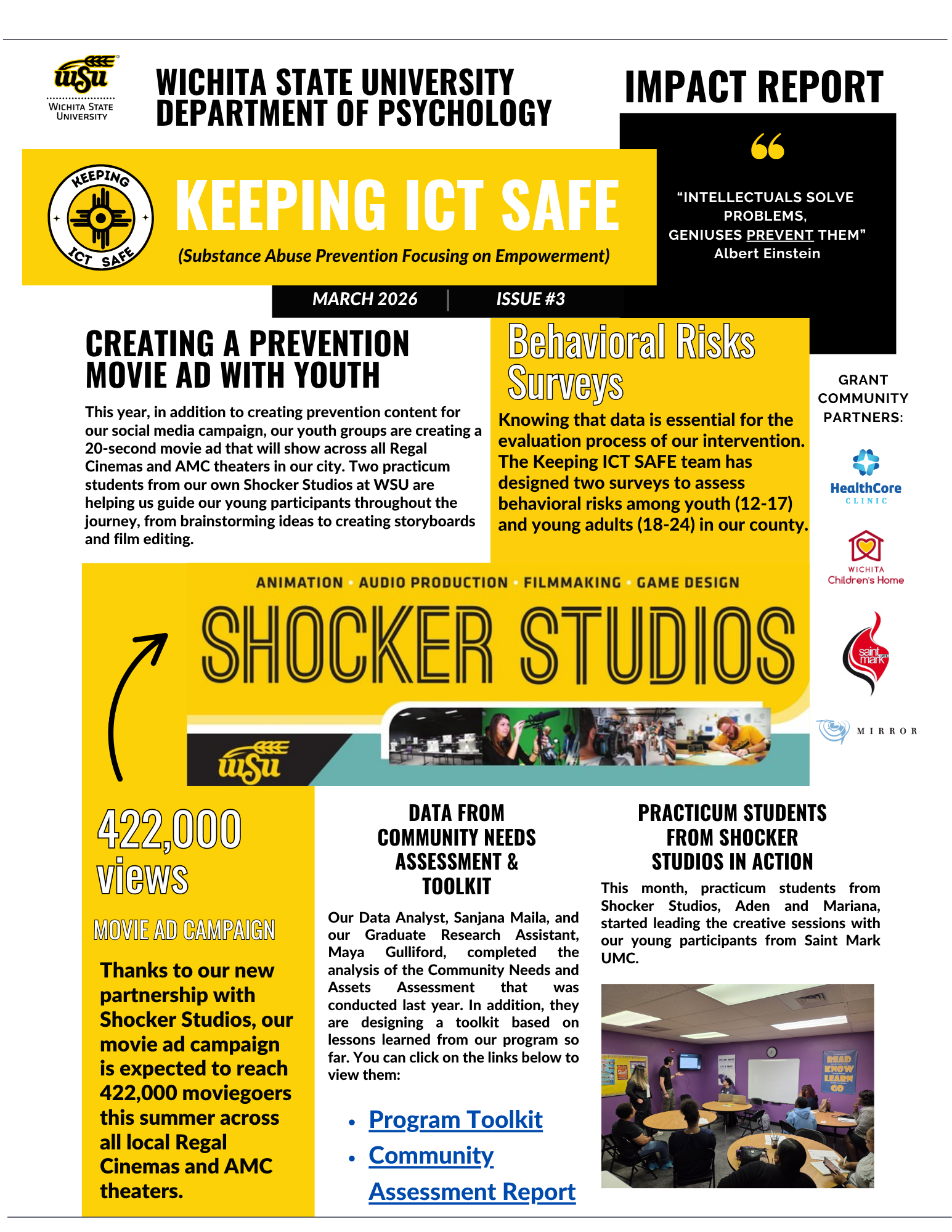
Sanjana Maila, MSBA, PGP-UXD, is our Project Data Analyst for the Keeping ICT Safe initiative. She holds a Master’s
degree in Business Analytics from Wichita State University and a Postgraduate Certification
in UX/UI Design from the University of Texas. With a background in Analytics and over
three years of experience in data analytics, Sanjana specializes in data storytelling,
process improvement, and dashboard design. She is proficient in tools such as Python,
SQL, Power BI, and SPSS, and she brings a human-centered design perspective to data
solutions. Passionate about using data for social impact, she supports program evaluation,
survey analysis, and digital strategy for youth-focused prevention efforts. Sanjana
is also a volunteer researcher at The Trespass Project, where she contributes to global
child rights advocacy through data analysis and UX research.

Maya N. Gulliford, MS, is a doctoral student in Community Psychology at Wichita State University and a
member of Dr. Rhonda K. Lewis’ research team. She holds both a bachelor’s and master’s
degree in Psychology. Her academic and professional work centers on community-based
prevention, mental health awareness, and program evaluation. As part of the Keeping
ICT Safe (KIS) initiative, Maya has contributed to the development of multiple evaluation
reports and community-facing materials used to demonstrate the program’s impact across
Sedgwick County. She has played an active role in engaging with program participants,
supporting data interpretation, and assisting in strategic planning for future program
development. Her work supports evidence-based decision-making and strengthens the
program’s ability to address substance use prevention and mental health promotion
within the community.