

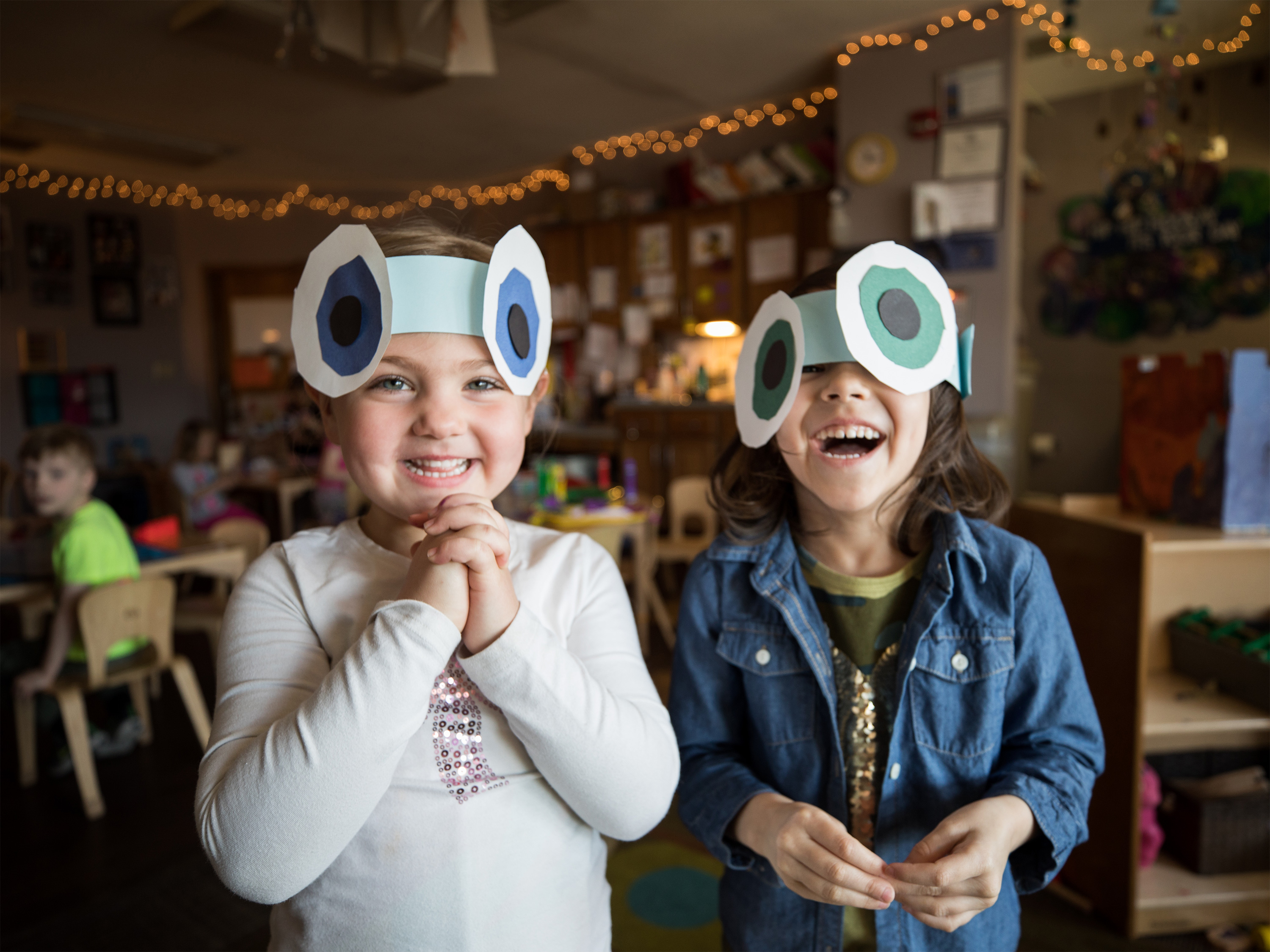
Our motto is “Children Learn Best Through Play.” Because all children are unique individuals and learn in different ways, we encourage exploration of materials in play-based settings. Every teacher is responsible for planning and implementing meaningful lesson plans and activities through the use of Developmentally Appropriate Practice.
The CDC also has take home bags that parents can check out to work on at home. Our Homework bags have educational materials and activities that you can do with your child. Our GoBags are for physical activity that includes music, movement and games for the whole family!
Classroom lesson plans and curriculum are in alignment with standards and benchmarks set by the Kansas Early Learning Standards: Accessible and Kansas Core Competenciesfor Early Childhood Care and Education Professionals. Individual lesson plans are also created for each child on a monthly basis that are directed at helping each child achieve developmental milestones. A developmental portfolio will be made for each child and follow them as the move from room to room.
The following areas are part of the CDC’s play-based settings used to address social/emotional, physical, sensory, language, cognitive, science, math, social studies and creative and individual development. Each developmental area is incorporated in each classroom from Infant to Pre-K.
An article by Lisa Murphy, The Ooey Gooey Lady® on what it means to be play based
Art Block Play Book Technology Outdoor Cooking Dramatic Play Manipulative Classroom Pets Math Music Science / Cognitive Sensory / Messy Table Writing Spanish Lessons
Art Center 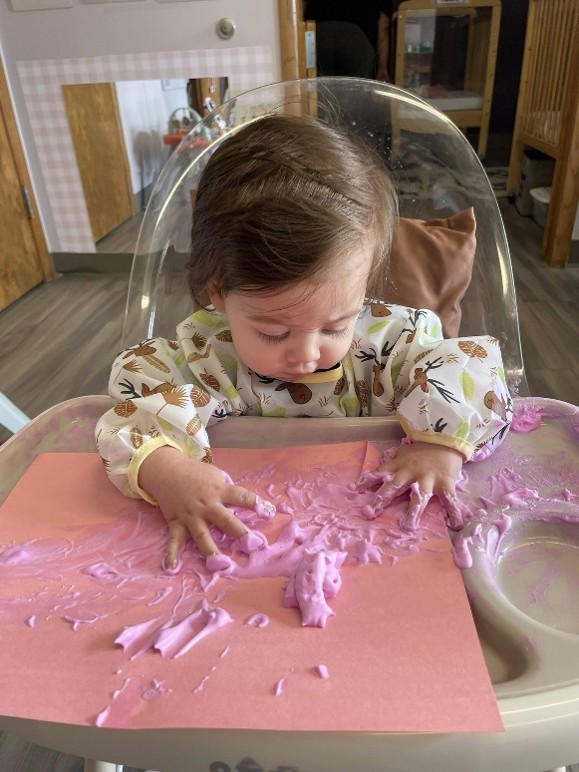
At the Art Center, children engage in a vibrant world of creativity and self-expression, fostering essential developmental skills that support their growth across multiple domains. Our goal is to create a nurturing environment where young learners can explore their artistic talents while developing important cognitive, physical, and social-emotional skills.
What Children Will Learn and Experience:
- Observation Skills: Developing an eye for detail as they explore colors, shapes, and textures in their artwork.
- Memory and Recall: Recalling techniques, colors, and ideas to enhance cognitive development.
- Classification and Sorting: Learning to organize materials and categorize their work, promoting logical thinking.
- Creativity and Imagination: Expressing their unique ideas and stories through various art mediums.
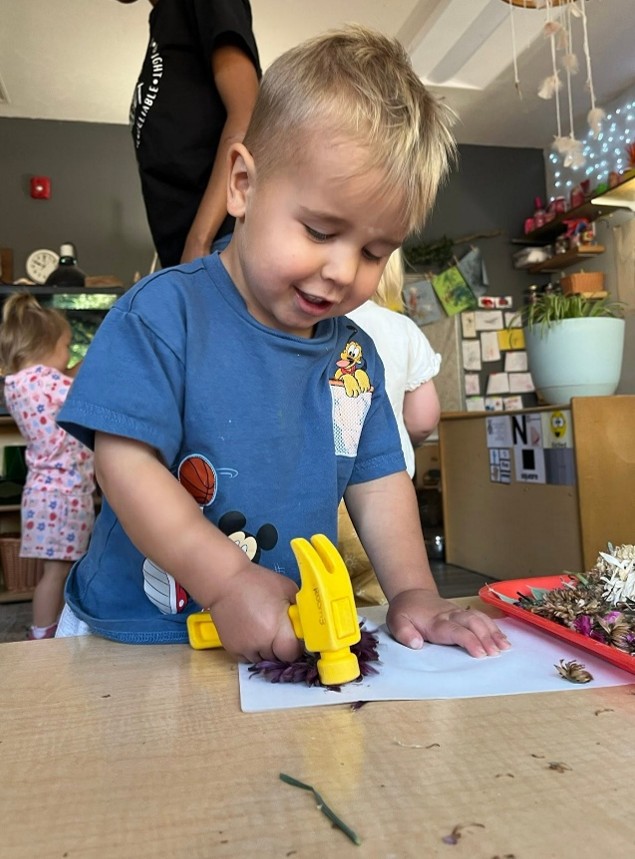
- Fine Motor Skills: Enhancing hand-eye coordination, dexterity, and precision through activities like painting, cutting, gluing, and coloring.
- Emotional Expression: Using art as a healthy outlet for feelings, fostering emotional
intelligence and self-awareness.
- Pride and Accomplishment: Building confidence as children complete projects and share their creations.
- Autonomy and Independence: Encouraging decision-making and personal responsibility in choosing materials and techniques.
- Sharing and Collaboration: Promoting social skills through group projects and respectful sharing of supplies.
- Language Development: Expanding vocabulary and communication skills as children describe their art and ideas.
Types of Artistic Activities:
Our Art Center offers a diverse array of activities designed to inspire and challenge children, including:
- Painting
- Drawing and coloring
- Collage and mixed media art
- Cutting and gluing
- 3D art projects
- Creative craftwork
In addition to fostering artistic skills, these activities support problem-solving, critical thinking, and perseverance. Our approach emphasizes exploration, experimentation, and joy in the creative process, helping children develop a well-rounded foundation for lifelong learning and self-expression.
Block Play Center 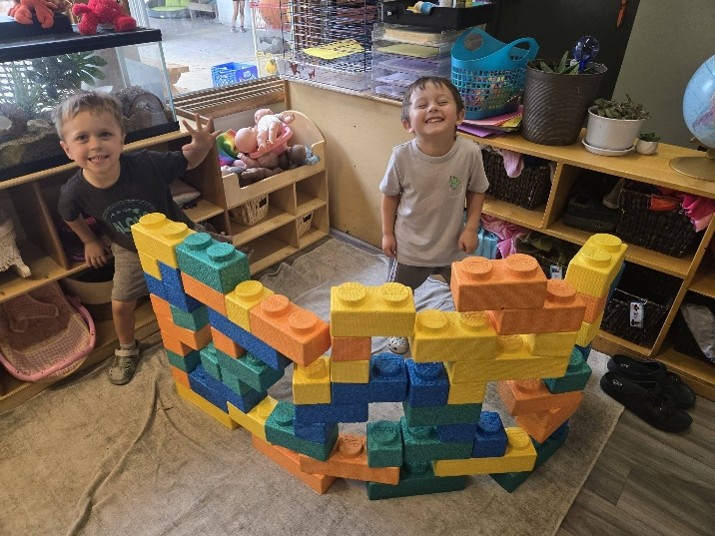
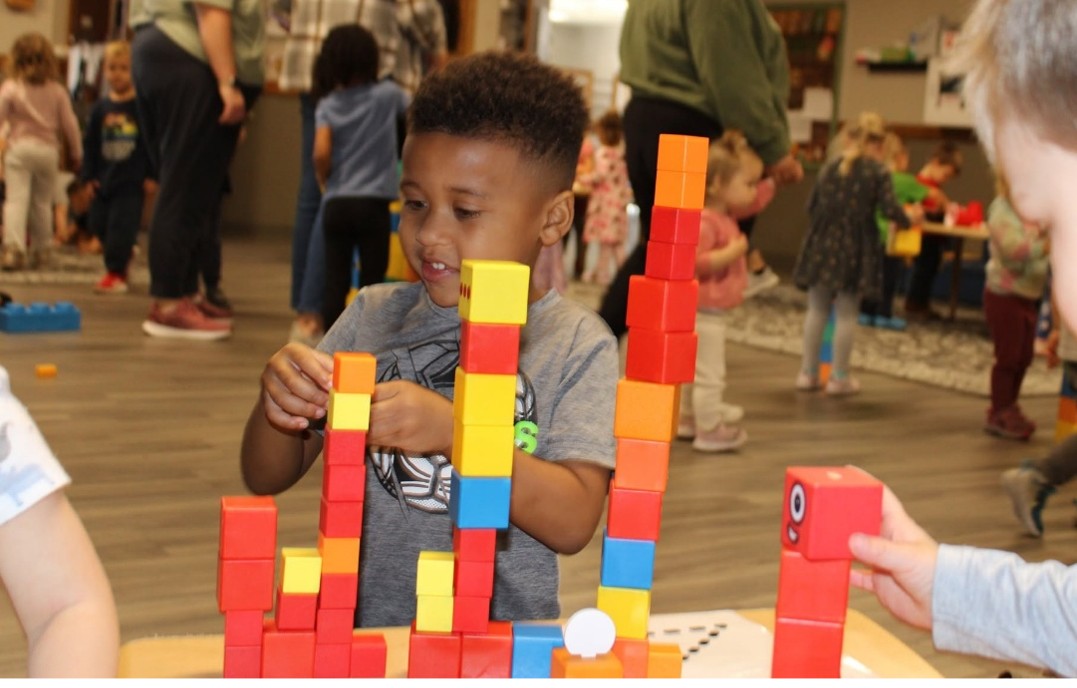
In our Block Area, children engage in hands-on play that promotes a wide range of developmental skills while fostering creativity and critical thinking. Building with blocks is more than just play, it's a rich learning experience that supports cognitive, social, and physical growth.
What Children Will Explore and Learn:
- Creative Thinking and Imagination: Designing unique structures and experimenting with different configurations.
- Building and Manipulating: Developing fine motor skills and hand-eye coordination through stacking, balancing, and assembling.
- Mathematics Concepts: Exploring ideas related to area, space, size, shape, depth, and measurement.
- Social Studies: Engaging in cooperative play, sharing materials, and learning about community roles through role-play with figures and vehicles.
- Problem Solving: Overcoming challenges like balancing structures and understanding stability.
- Scientific Concepts: Experimenting with gravity, weight, and cause-and-effect relationships as they build and test their creations.
- Patterns and Sequencing: Recognizing and creating patterns, developing early math and reasoning skills.
- Language Development: Describing their structures, sharing ideas, and engaging in meaningful conversations about their work.
- Materials and Environment:
Our Block Area features a variety of block types to inspire diverse play experiences, including:
- Soft blocks
- Cardboard blocks
- Wooden blocks
- Plastic blocks
To enrich the environment, we incorporate additional materials such as:
- Small animals and figurines
- People figures
- Vehicles like cars and trucks
- Other building accessories
These materials encourage imaginative role-play, storytelling, and collaborative building activities, fostering social skills and respect for others’ work.
Safety and Observation:
Children are taught to observe safety rules while playing and to respect the work of their peers. Our goal is to create a safe, supportive space where children can explore, experiment, and develop a lifelong love for learning through constructive play.
Book Center 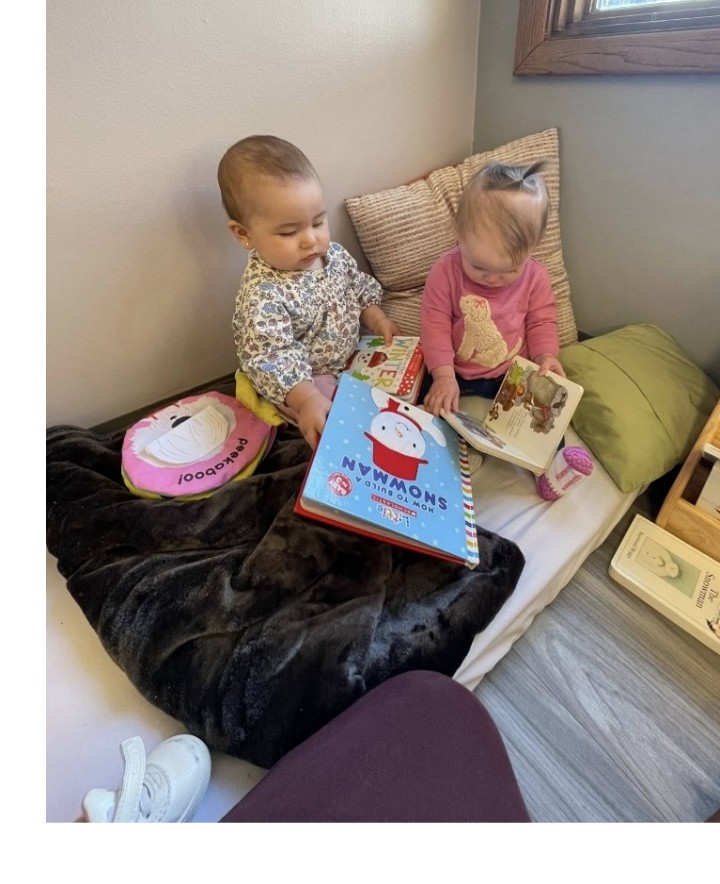
Our Book Center provides a warm and inviting space where children develop a love for reading and build essential language and literacy skills. Through engaging with books, whether being read to or exploring independently, children experience a multitude of learning opportunities that support their overall growth.
What Children Will Discover and Learn:
- Concept Formation: Understanding categories, shapes, colors, and other fundamental ideas through story content and illustrations.
- Object Labeling: Building vocabulary by naming familiar objects, characters, and settings.
- Peer and Adult Interaction: Developing social skills through shared reading experiences
and conversations about
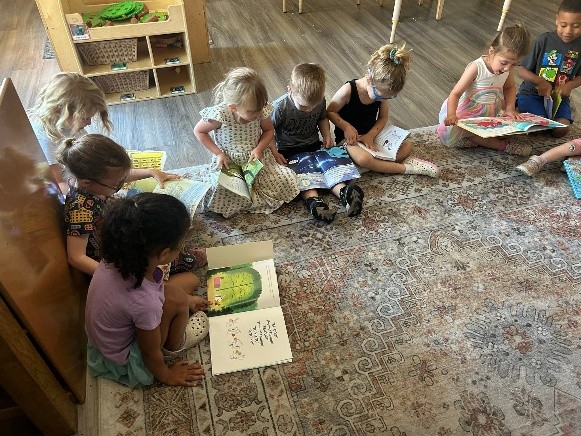 stories.
 - Sentence Structure and Language Development: Listening to and forming sentences, enhancing grammar and syntax.
- Vocabulary Growth: Expanding their word bank as they encounter new words in stories and discussions.
- Positive Attitudes Toward Reading: Cultivating curiosity, enjoyment, and confidence in exploring books and stories.
- Early Literacy Skills: Recognizing print concepts, understanding story sequences, and developing phonological awareness.
A Cozy and Engaging Environment: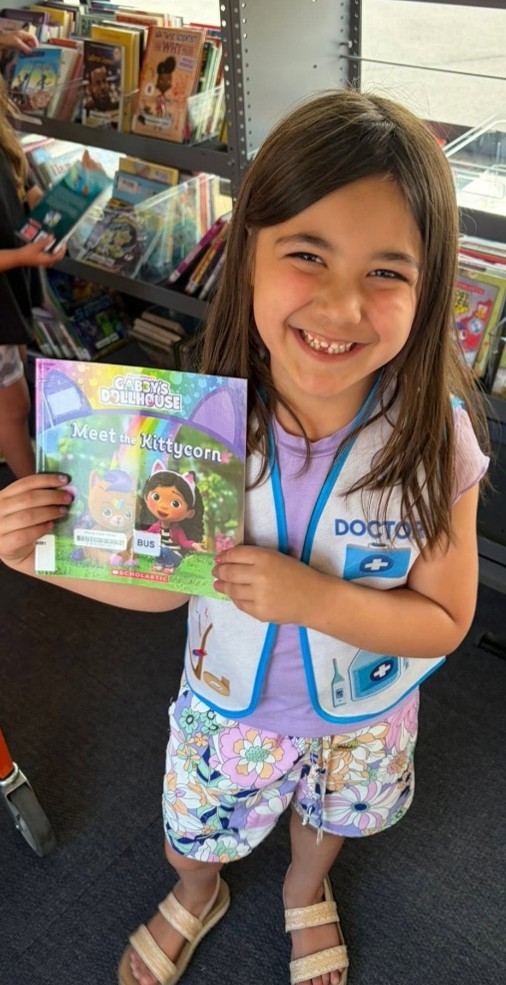
Most of our Book Centers are designed as comfortable retreats where children can relax and enjoy reading. These cozy spaces feature:
- Soft lighting
- Fluffy pillows
- Lots of stuffed animals
- Child-sized furniture, puppets, plush toys, and blankets create a welcoming atmosphere that encourages children to linger, explore, and develop a genuine love for books.
Fostering Routine and Respect for Books:
Taking care of books becomes an integral part of daily routines, helping children understand their value and teaching responsibility. As children develop familiarity and comfort in the Book Center, they cultivate a lifelong appreciation for reading that nurtures their imagination, vocabulary, and love of learning.
Technology
At our Center, technology is integrated thoughtfully to enhance learning while fostering
creativity and social interaction. Our classrooms utilize interactive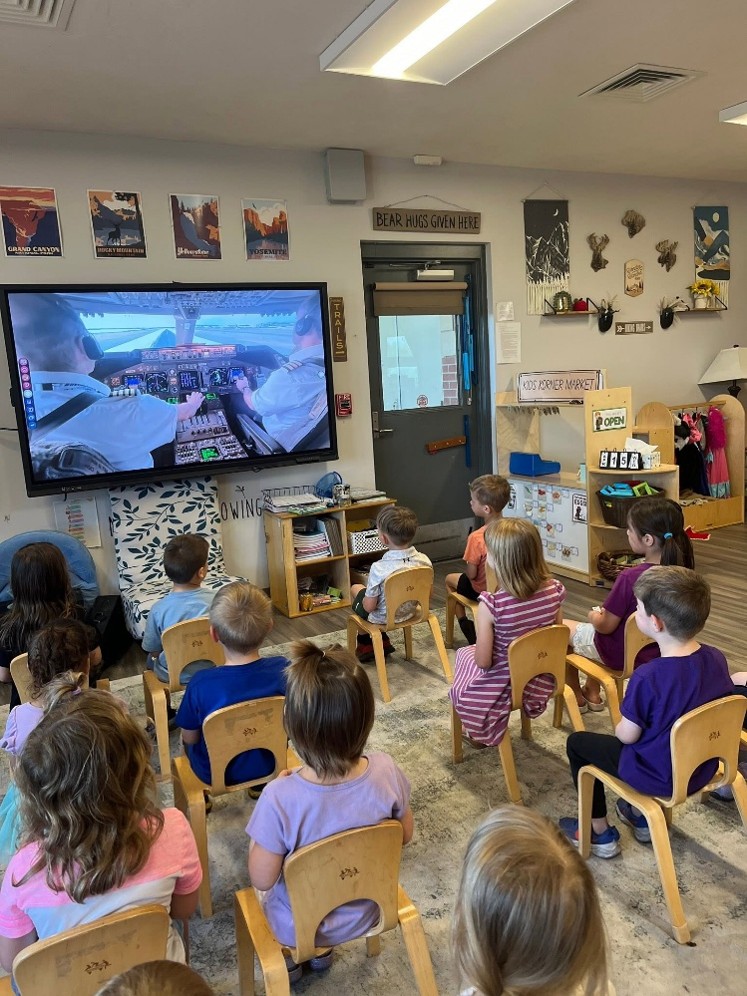 smartboards as a versatile educational tool to support curriculum goals across various
subjects.
smartboards as a versatile educational tool to support curriculum goals across various
subjects.
What Children Will Explore and Learn:
- Digital Literacy Skills: Developing comfort and familiarity with technology through guided activities on the smartboard.
- Educational Concepts: Learning foundational cognitive skills based on specific software programs, including problem-solving, pattern recognition, and critical thinking.
- Engagement with Multimedia Content: Accessing educational videos, songs, dances, and interactive clips that reinforce learning in fun and engaging ways.
Guidelines and Approach:
- Limited Screen Time: To promote healthy development, children have scheduled and limited smartboard use in each classroom.
- Balancing Technology and Imagination: While technology serves as a valuable learning
resource, our primary focus remains on fostering children’s natural
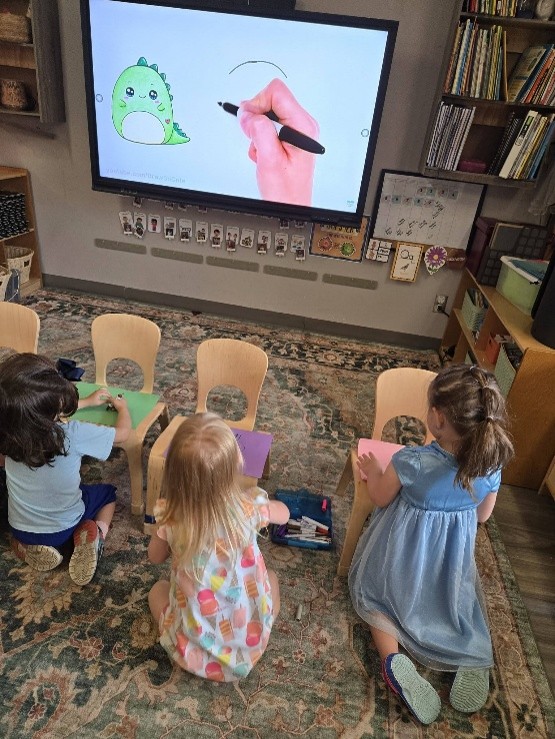 curiosity, imagination, and social interactions.
 - Social Interaction: Emphasizing face-to-face communication, collaborative play, and hands-on activities ensures that technology complements rather than replaces meaningful social experiences.
Our goal is to use technology thoughtfully as a tool to enrich learning, support curriculum objectives, and inspire children’s natural enthusiasm for discovery, all while maintaining a balanced approach that values creativity and social development.
Outdoor Play 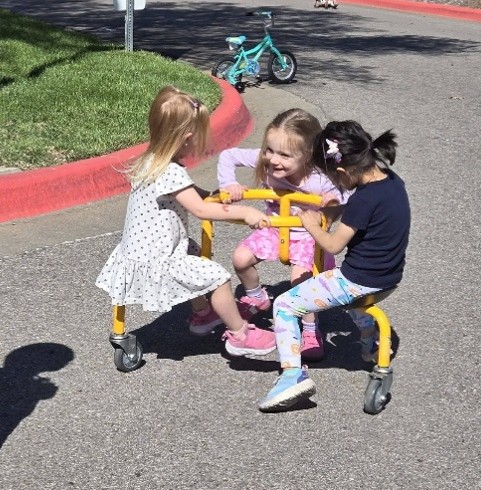
Outdoor play is a vital part of our daily routine, offering children endless opportunities for active exploration, social interaction, and physical development. Our outdoor environments are designed to support growth in a safe and engaging setting.
What Children Will Learn and Experience:
- Decision-Making Skills: Choosing activities, equipment, and strategies during play.
- Problem Solving: Navigating challenges such as balancing on equipment or working together on group projects.
- Autonomy: Developing independence through choosing and engaging in activities.
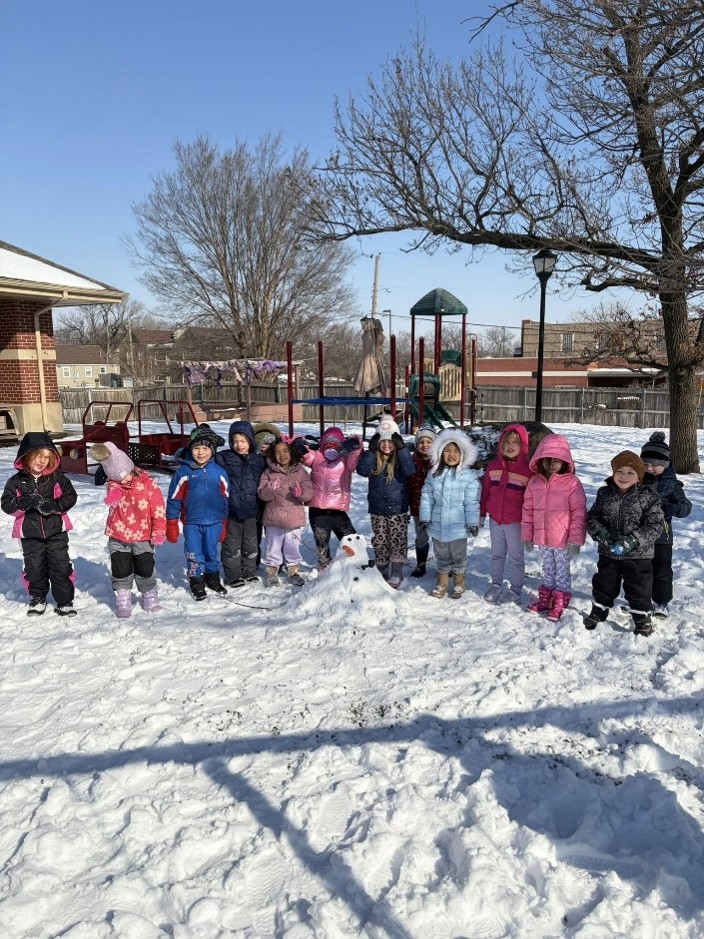
- Large Muscle Coordination: Building strength, balance, and motor skills through running, climbing, swinging, and riding bikes.
- Social Relationships: Making friends, sharing, taking turns, and practicing cooperation.
- Language Development: Communicating ideas, sharing stories, and expanding vocabulary during social interactions.
- Imagination: Engaging in pretend play and creative scenarios in an open-ended environment.
- Safety Awareness: Learning to play safely, understand boundaries, and respect others.
Outdoor Environment and Activities, our outdoor space is active and developmentally appropriate, equipped with:
- Swings and slides
- Bicycles and riding toys
- Sandboxes for digging and building
- Seesaws and water tables for sensory and cooperative play
- Other toys such as loose parts, blocks, cars, and building supplies
Weather permitting, outdoor play occurs at least twice daily in every classroom, providing children with fresh air, sunshine, and physical activity. Additionally, children participate in nature walks with teachers, exploring the natural world around them.
Safety and Security:
Our playgrounds are securely enclosed with locked privacy fences, ensuring a safe environment where children can freely explore and develop confidence in their physical abilities.
Cooking Center 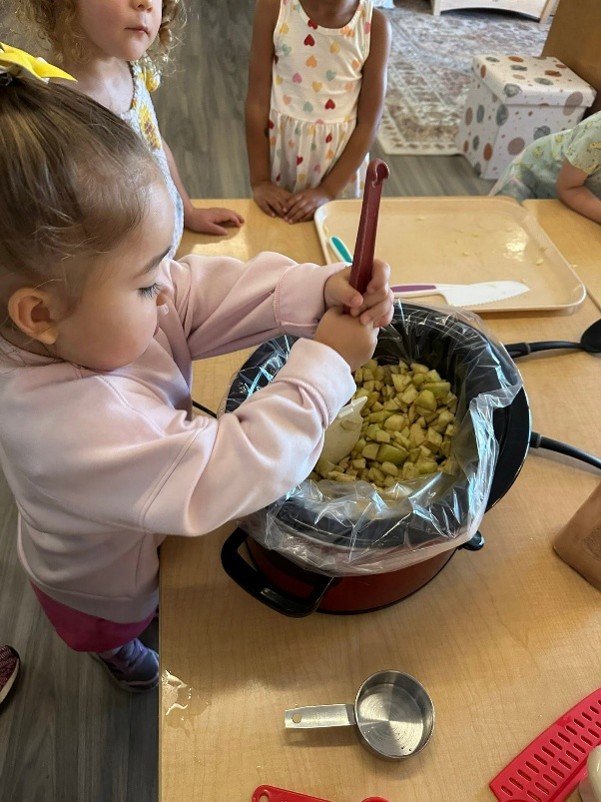
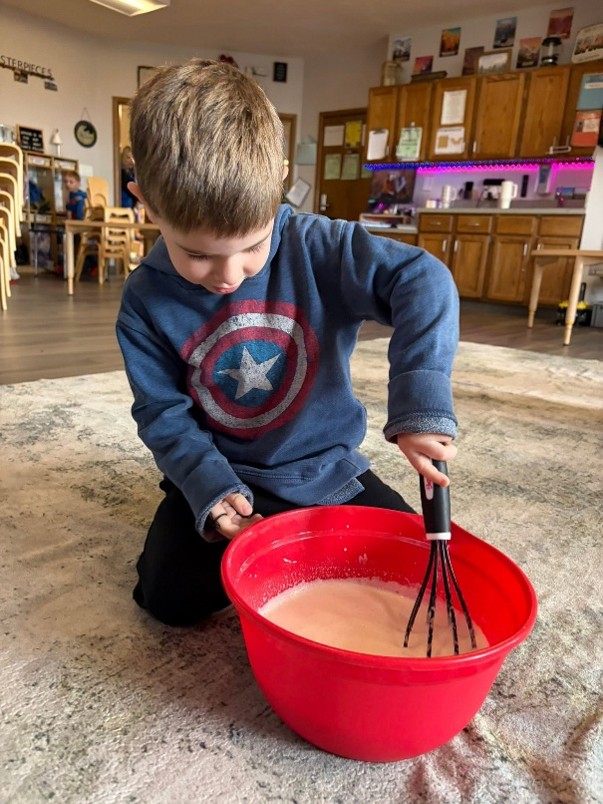
Our Cooking Center offers children a hands-on experience that combines fun with valuable learning opportunities. Engaging in cooking activities helps children develop a variety of skills while fostering independence, curiosity, and a positive attitude toward healthy eating.
What Children Will Learn and Experience:
- Self-Esteem: Achieving a sense of pride and confidence through successfully completing cooking tasks.
- Safety: Learning important kitchen safety rules, including proper handling of utensils and hot surfaces.
- Cooperation: Working together with peers to accomplish shared cooking goals.
- Nutrition and Health: Gaining awareness of healthy ingredients, balanced meals, and the importance of good nutrition.
- Task Completion: Developing patience, persistence, and the ability to follow multi-step processes.
- Language Development: Using new vocabulary related to cooking, ingredients, and processes.
- Following Directions: Learning to listen carefully and follow step-by-step instructions.
- Cause-and-Effect Relationships: Understanding how actions like mixing or heating ingredients lead to changes in the food.
- Measurement and Concepts: Exploring concepts of volume, weight, and sequences through measuring ingredients and timing activities.
Our Approach and Community Involvement:
Throughout the year, we seek grants and funding opportunities that enable us to expand our culinary experiences. These resources help us grow fresh gardens, provide seasonal produce, and purchase a wide variety of educational materials. This integration of gardening and cooking enriches children’s understanding of where food comes from, healthy eating habits, and sustainability.
Our Cooking Center provides a flavorful, educational environment where children learn essential life skills, develop a love for nutritious foods, and enjoy the process of creating delicious meals together.
Dramatic Play Center 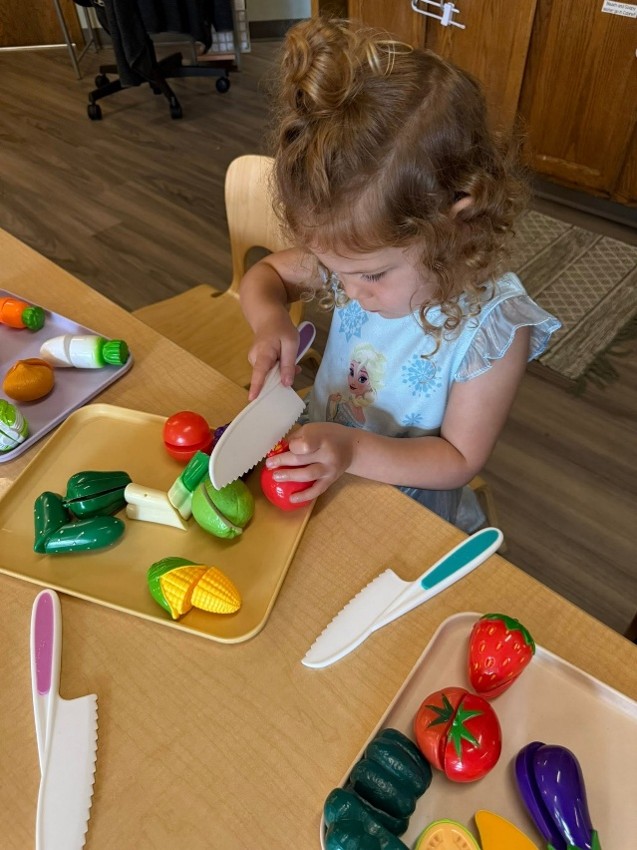
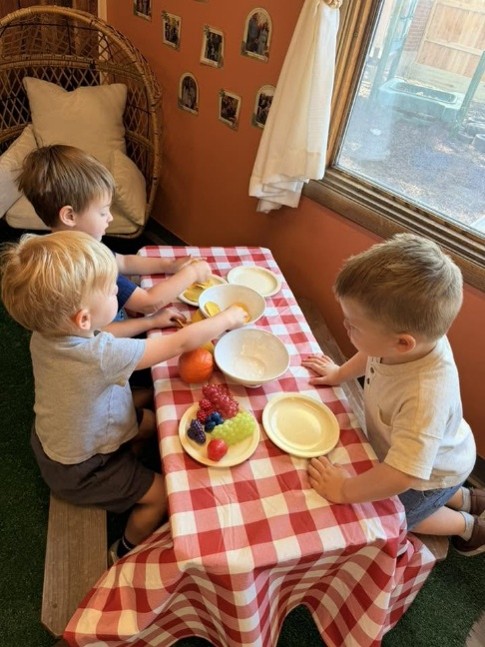
Our Dramatic Play Center serves as a vibrant space where children explore the world through imaginative role-playing. This area encourages social-emotional development, cultural awareness, and cognitive growth as children take on various roles and scenarios.
What Children Will Learn and Experience:
- Socialization: Building friendships, sharing, and engaging in cooperative play with peers.
- Representation and Role-Playing: Acting out real-life and imaginary roles, such as family members, community helpers, or characters from stories.
- Language Development: Expanding vocabulary and communication skills through dialogue and storytelling.
- Coping Strategies: Learning to express feelings, resolve conflicts, and manage emotions during play.
- Sharing and Cooperation: Developing patience, turn-taking, and collaborative decision-making skills.
- Imagination and Creativity: Using props and costumes to invent stories and explore different perspectives.
- Cultural Appreciation: Valuing diverse cultures, traditions, and ways of life by incorporating cultural props, dress-up costumes, and language into play.
Materials and Environment, our children have access to a wide variety of toys and accessories, including:
- Dress-up clothes (princess, fairy, superhero costumes)
- Dolls and baby figures
- Kitchen sets and food toys
- Puppets and dollhouses
- Vehicles like cars and garages
- Tools, jewelry, and other dress-up items
In this space, children can assume roles such as family members, community workers, or characters from their imagination. These experiences help them understand social roles and develop empathy and self-awareness.
Inclusive and Respectful Environment:
We actively incorporate each child's cultural background, language, and personal interests into the play environment. This approach ensures that every child feels valued, respected, and celebrated as a unique individual.
Manipulative Center 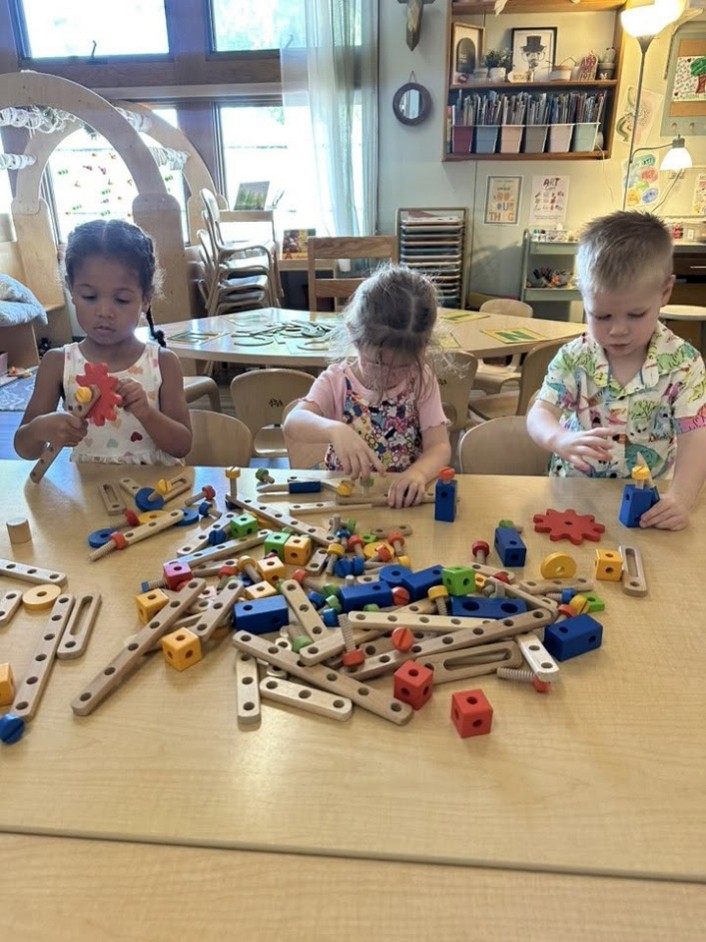
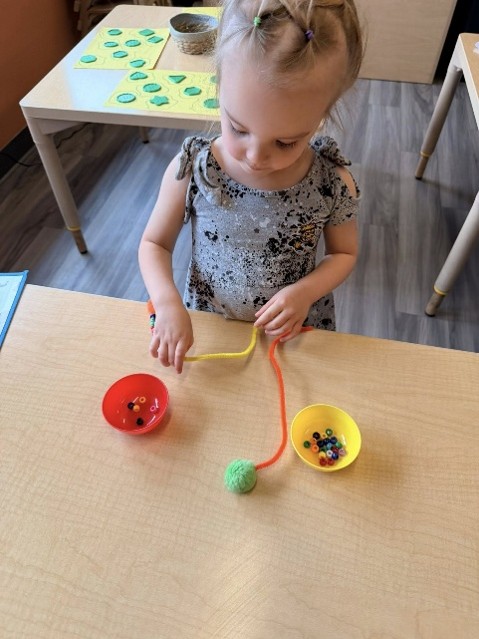
Our Manipulative Center offers children a hands-on environment to explore, experiment, and develop foundational cognitive and motor skills. Through engaging with various manipulatives, children build critical thinking, coordination, and social skills while enjoying active learning.
What Children Will Learn and Experience:
- Problem Solving: Figuring out how pieces fit together and overcoming challenges in activities.
- Decision-Making Skills: Choosing appropriate materials and strategies to complete tasks.
- Peer Interaction: Collaborating, sharing, and communicating with friends during play.
- Self-Discipline: Developing patience and focus as they work through multi-step activities.
- Relationship Building: Learning cooperation and respect through group activities.
- Dexterity and Fine Motor Control: Enhancing hand strength, precision, and coordination.
- Task Completion: Following through on activities from start to finish.
- Classification and Sequencing: Sorting objects by attributes and organizing steps logically.
- Number Concepts: Exploring counting, patterns, and basic numeracy through activities.
- Visual Discrimination: Differentiating sizes, shapes, and patterns to refine perceptual skills.
- Self-Concept: Gaining confidence in abilities as they master new skills.
- Eye-Hand Coordination: Improving the ability to guide hand movements based on visual input.
Materials and Environment: In our Manipulative Center, children will find a variety of engaging materials, including:
- String and connecting beads
- Puzzles and pegboards
- Sorters and pattern blocks
- Tweezers and tongs for fine motor practice
- Activity boxes with a range of hands-on tasks
Each classroom offers a diverse selection of activities tailored to children's interests and developmental levels, allowing them to learn at their own pace and follow their curiosity.
Classroom Pets 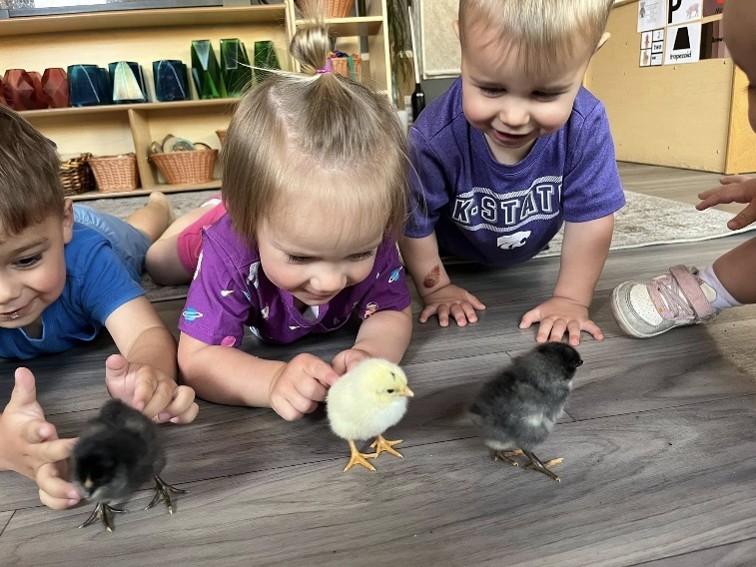
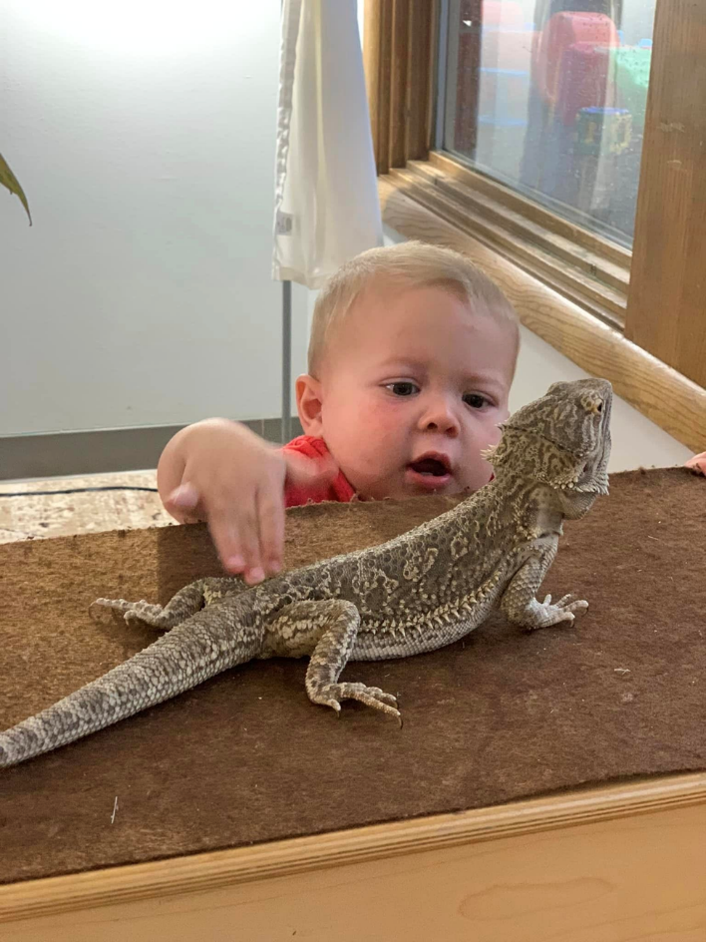
Our classroom pets provide children with a wonderful opportunity to connect with living creatures, fostering empathy, responsibility, and curiosity. Each classroom cares for a different pet, allowing children to develop a sense of compassion and teamwork through daily interactions and caregiving.
What Children Will Learn and Experience:
- Compassion and Empathy: Caring for pets helps children understand and respect living beings, developing kindness and emotional awareness.
- Responsibility: Learning to feed, clean, and observe their pets teaches accountability and the importance of consistent care.
- Teamwork and Cooperation: Working together to care for the animals encourages collaboration and shared responsibility.
- Character Development: Building patience, nurturing skills, and respect through ongoing interactions with their pets.
- Observation and Growth: Watching their pets grow and change fosters curiosity and scientific thinking.
Our Classroom Pets Include (but are not limited to):
- Fish
- Bearded dragons
- Geckos (including crested geckos and leopard geckos)
- Millipedes
- Madagascar Hissing cockroaches
- Salamanders
- Birds
Each pet provides unique opportunities for children to learn about different animal behaviors, habitats, and needs. Children are actively involved in caring for these animals, learning about their environments, diets, and life cycles.
A Living Learning Experience:
Having a classroom pet helps children develop a deeper understanding of the natural world and emphasizes the importance of kindness and responsibility. These living creatures become part of the classroom community, inspiring awe, respect, and a lifelong appreciation for animals.
Math Center
Our Math Center offers children a dynamic environment to explore foundational mathematical
concepts through hands-on activities and engaging materials. This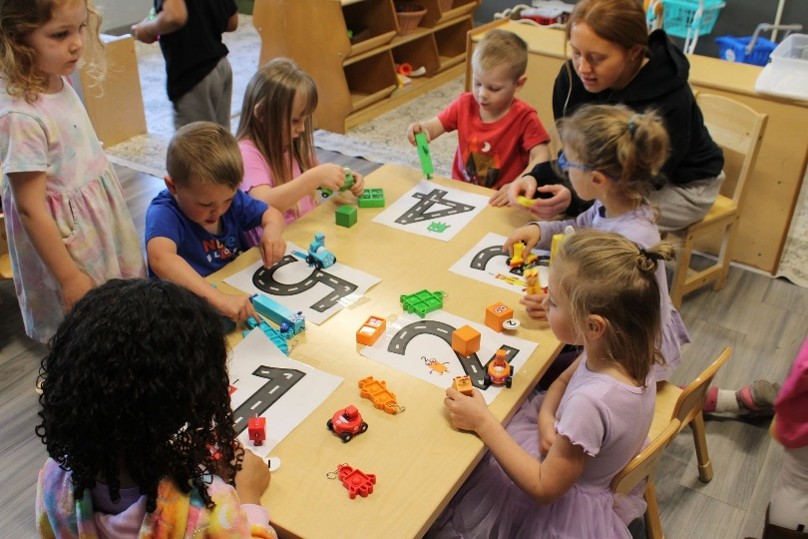 space fosters a positive attitude toward math by making learning fun and meaningful.
What Children Will Learn and Experience:
- Comparison and Measurement: Understanding differences in size, length, weight, and volume using various tools.
- Classification: Sorting objects by attributes such as shape, color, or size to develop categorization skills.
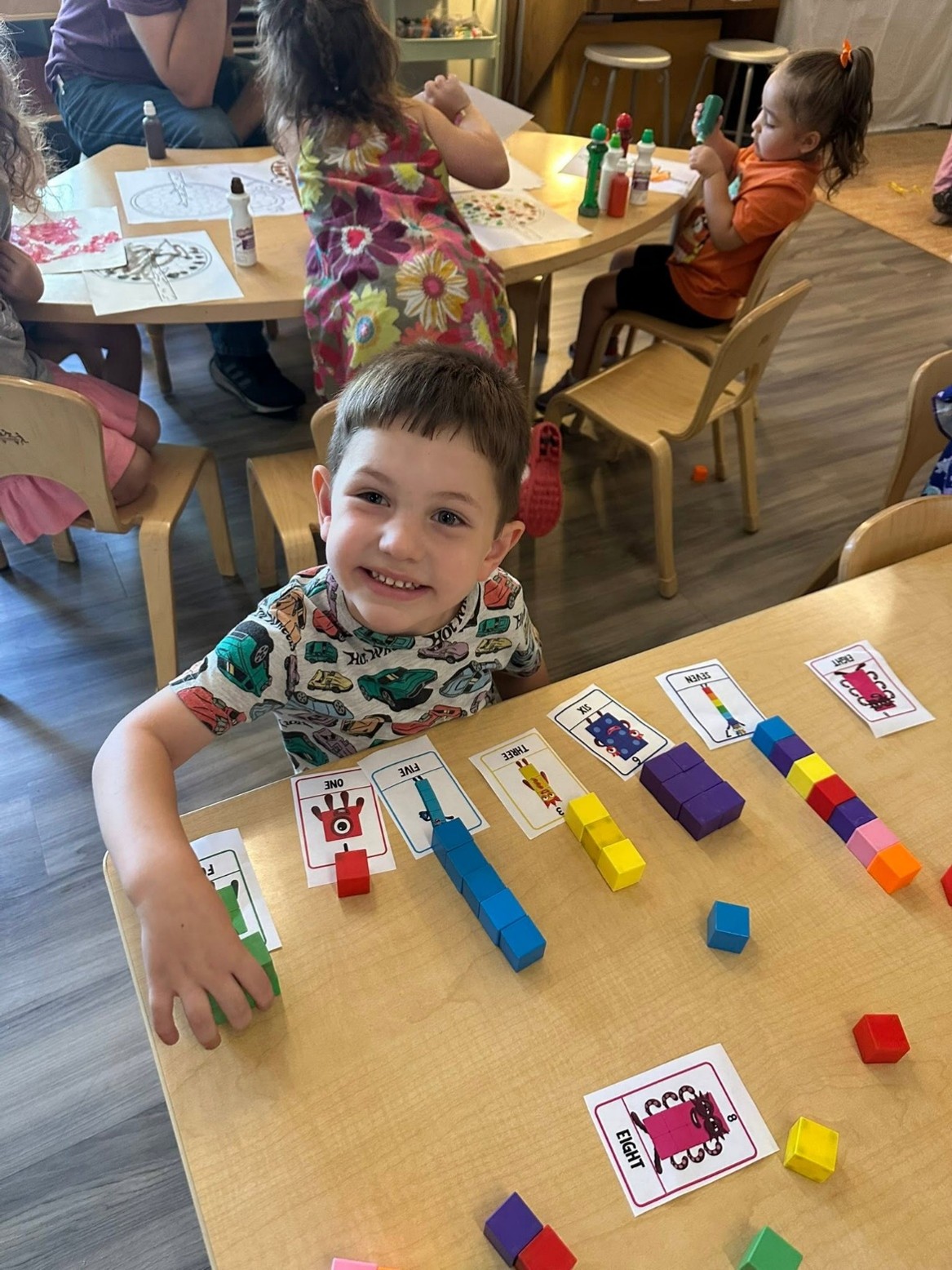
- Counting and Number Concepts: Learning to count accurately, recognize numbers, and understand their value.
- Operations: Building early understanding of addition and subtraction through practical
activities.
- Spatial Relationships: Exploring concepts like over, under, between, and next to to develop awareness of space.
- Sets and Grouping: Recognizing and creating groups of objects to strengthen early math reasoning.
- Language and Problem Solving: Using math vocabulary and reasoning skills to solve problems and describe their thinking.
Materials and Activities:
Our Math Center features a variety of tools and activities designed to make math engaging, including:
- Scales for weighing objects
- Measuring cups and rulers
- Counters and sorters for grouping
- Flashcards for number recognition
- Puzzles, pattern blocks, and other manipulatives
Children are encouraged to explore and experiment with these materials, fostering curiosity and confidence in their mathematical abilities.
A Fun Approach to Learning:
By integrating play and hands-on experiences, our Math Center helps children develop critical thinking, problem-solving skills, and a love for math that can last a lifetime. Math becomes an exciting adventure where discovery and learning go hand in hand.
Music Center
Our Music Center provides children with a lively environment to explore sound, rhythm,
and movement. Engaging with music helps children express emotions,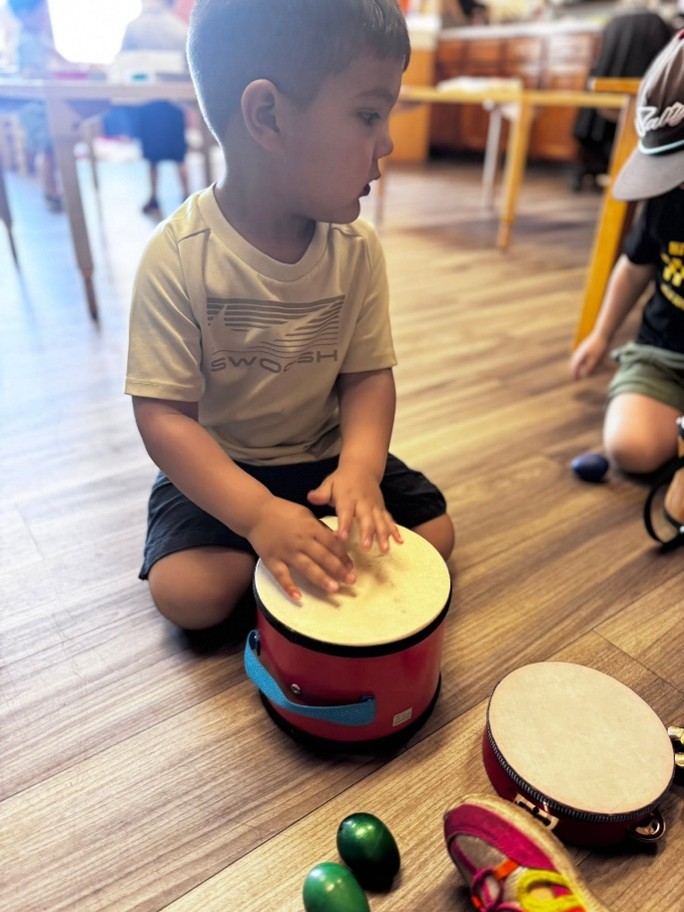 develop creativity, and build important social and motor skills through singing,
dancing, and playing instruments.
develop creativity, and build important social and motor skills through singing,
dancing, and playing instruments.
What Children Will Learn and Experience:
- Emotional Expression: Using music and movement to share feelings and develop self-awareness.
- Positive Self-Concept: Gaining confidence through musical participation and performance.
- Creativity: Creating rhythms, melodies, and movements that reflect their ideas and imagination.
- Awareness of Self and Others: Developing social skills through group singing, dancing, and musical play.
- Listening Skills: Paying attention to sounds, beats, and patterns in music.
- Communication: Using musical expressions and gestures to share thoughts and feelings.
- Following Directions: Learning to listen and respond to cues from teachers and peers.
- Creative Movement: Moving freely to music, exploring body awareness, and developing coordination.
- Language Development: Expanding vocabulary, singing songs, and engaging in finger
plays and chants.
- Beat and Tempo: Recognizing and matching rhythms, fostering auditory discrimination skills.
Materials and Activities:
Our Music Center is equipped with:
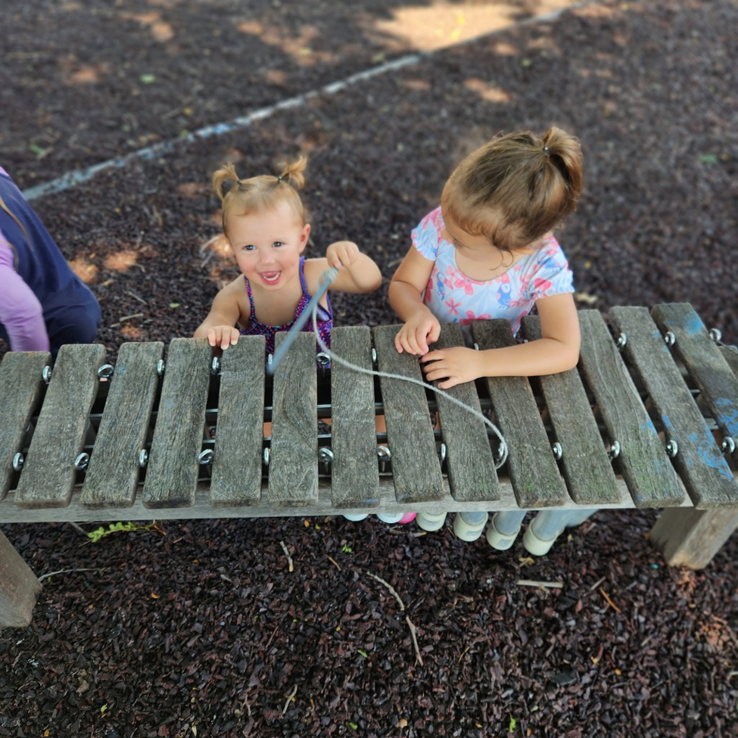
- Various musical instruments (drums, shakers, maracas, xylophones, and more)
- Musical props such as streamers and batons
- A wide selection of music on CDs representing different cultures
- Pianos and other keyboard instruments
Cultural Awareness and Special Programs:
Children also learn about different cultures through their music and instruments, fostering respect and curiosity for diversity. Additionally, once a month the while center gathers to conduct singing and dancing activities. And once a month each class is partner with another class for singing and dancing to help inspire enthusiasm and musical exploration.
A Joyful Learning Environment:
Through musical activities, children develop fine and gross motor skills, coordination, and a lifelong appreciation for music and cultural diversity, all while having fun and expressing themselves creatively.
Science / Cognitive Center 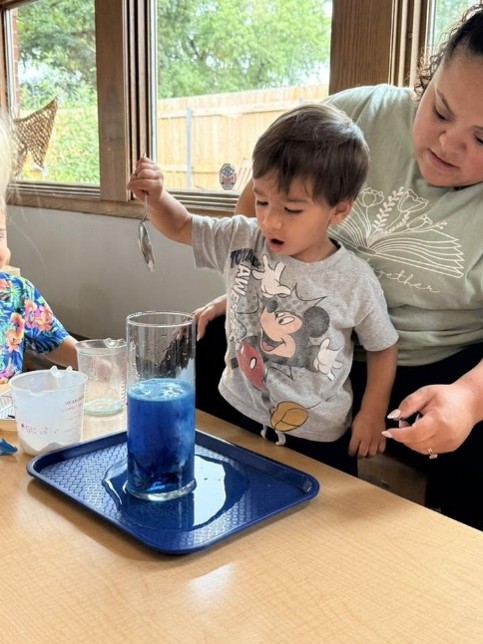
Our Science and Cognitive Center offers children a hands-on environment to explore the natural world, develop critical thinking skills, and cultivate a sense of curiosity and discovery. Through engaging activities and materials, children learn about life cycles, seasons, the environment, and scientific concepts in an age-appropriate and exciting way.
What Children Will Learn and Experience:
- Seasons and Life Cycles: Understanding changes in nature, such as plant growth, animal hibernation, and weather patterns.
- Sharing and Social Skills: Learning cooperation and patience while conducting experiments and exploring materials.
- Physical Changes and the World Around Us: Observing and discussing phenomena like rain, body parts, senses, and weather.
- Measuring and Comparing: Using tools to pour, weigh, and measure volume and weight, fostering early math and science skills.
- Creativity and Imagination: Designing experiments, creating models, and exploring ideas through open-ended play.
- States of Matter: Exploring solids, liquids, and gases through experiments and play.
- Balance and Coordination: Developing fine and gross motor skills through activities that involve pouring, measuring, and manipulating objects.
- Scientific Inquiry: Conducting simple experiments, making observations, and asking questions to understand the world better.
- Eye-Hand Coordination: Improving precision and control through hands-on science activities.
Materials and Environment:
Our classrooms are equipped with a variety of educational tools and materials, including:
- Measuring cups, scales, and rulers
- Weights and balances
- Bug blocks, fossils, and nature materials (rocks, pine cones, seashells)
- Globes, maps, and solar system models
- Classroom pets and animal figures
- Thermometers and science posters
- Play animals, bugs, and people for imaginative scenarios
- Books and posters about science topics
Encouraging Exploration and Curiosity:
Children are encouraged to ask questions, experiment, and explore the world around them. Our Science/Cognitive Center nurtures a love for discovery, critical thinking, and a deeper understanding of how things work, all in a fun and engaging environment that sparks their natural curiosity.
Sensory Center / Messy Table 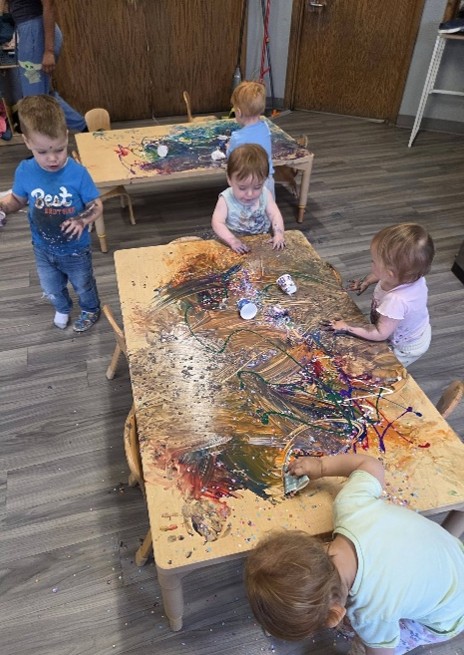
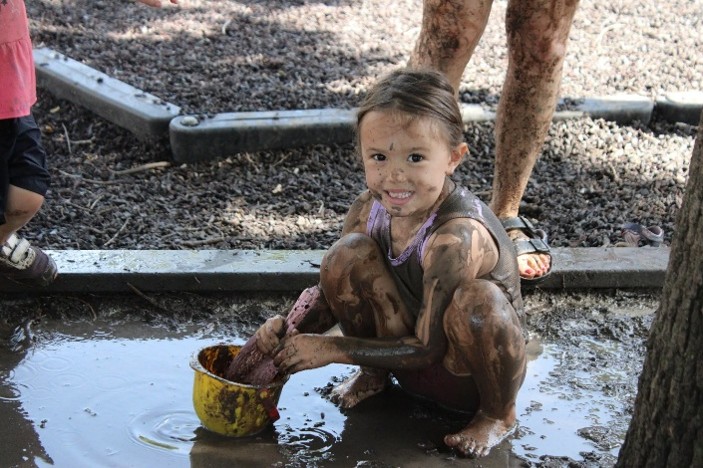
Our Sensory Center and Messy Tables provide children with rich, hands-on opportunities to explore textures, properties, and materials through sensory play. These experiences support overall development and foster curiosity, creativity, and critical thinking.
What Children Will Learn and Experience:
- Motor Control: Developing both large and small muscle skills through active exploration.
- Hand-Eye Coordination: Improving precision as children pick up, pour, and manipulate materials.
- Properties Identification: Recognizing textures, shapes, and consistencies of different materials.
- Measurement and Comparison: Observing differences and similarities between objects and substances.
- Observation and Evaluation: Noticing changes, making observations, and forming judgments about their experiences.
- Prediction and Cause-and-Effect: Anticipating outcomes and understanding how actions influence results.
- Cooperation and Social Interaction: Sharing materials, working together, and communicating during sensory activities.
- Language Development: Describing textures, actions, and experiences to expand vocabulary and expressive language skills.
Sensory Experiences and Materials:
Our classrooms feature several sensory activities and materials, including:
- Messy tables with oatmeal, cornmeal, pasta, beans, rice, sand, water, and flour
- Water play and swimming in sensory pools
- Mud Play
- Play with Play-Doh, volcanoes, pudding, goop, lotion, and shaving cream
- Activities involving spaghetti, rice bins, and other tactile materials
Purpose and Benefits:
Sensory play exposes children to a variety of foods, textures, and experiences they might not encounter otherwise, supporting their sensory processing and emotional regulation. These activities help children build confidence, explore their environment safely, and develop a lifelong love for discovery and learning. We love to get messy!
Writing Center
Our Writing Center provides children with a supportive environment to develop essential
literacy skills while fostering creativity and self-expression. Through engaging activities,
children learn to organize their thoughts, improve fine motor control, and recognize
and form letters.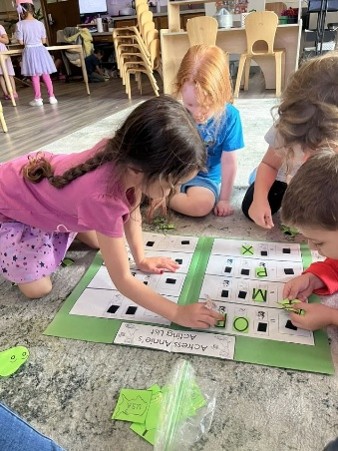
What Children Will Learn and Experience:
- Organization: Sequencing ideas and structuring drawings and writing.
- Fine Motor Control: Strengthening hand muscles through coloring, drawing, and writing activities.
- Language Skills: Recognizing letters, understanding their sounds, and beginning to form words.
- Letter Formation and Recognition: Learning to write letters correctly and identifying them in words.
- Creativity: Expressing thoughts and feelings through drawing, coloring, and writing stories.
- Developmental Progress and Tracking:
In preschool, children focus on forming and writing letters, while our Pre-K classroom
emphasizes mastery of these skills in preparation for Kindergarten. Parents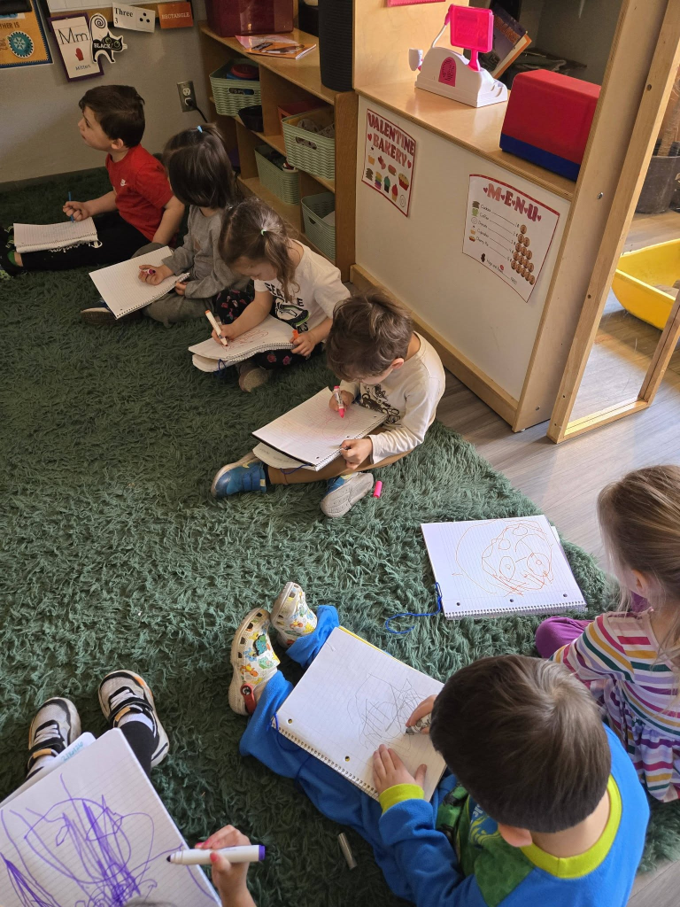 can track their child's progress through developmental portfolios, where they'll
see how simple dots evolve into people and lines transform into recognizable letters.
can track their child's progress through developmental portfolios, where they'll
see how simple dots evolve into people and lines transform into recognizable letters.
Encouraging a Love for Writing:
Children love to draw and color, and through these activities, they naturally develop the skills necessary for writing. Our goal is to nurture their confidence and enthusiasm as they learn to communicate their ideas through written language.
Spanish Lessons
At the CDC, children have the opportunity to learn Spanish once a week through dedicated lessons conducted by our Foreign Language Department. These engaging sessions introduce young learners to basic vocabulary, phrases, and cultural awareness, fostering an early appreciation for languages and diverse cultures. Our goal is to promote language development, enhance communication skills, and inspire curiosity about the world beyond their immediate environment.