Wichita State University will launch two graduate programs in forensic firearms and forensic biology in fall 2026, expanding the pipeline of trained specialists prepared for careers in federal, state and local crime laboratories.
The programs were developed in collaboration with the Bureau of Alcohol, Tobacco, Firearms and Explosives (ATF) and regional partners at the Sedgwick County Regional Forensic Science Center and the Kansas Bureau of Investigation, and they were created to meet a growing national need for examiners who can step into a lab and get to work.
 “We asked, ‘What would a well-qualified entry-level applicant look like?’ That helped
us identify the applied learning and the acquired skills that these programs would
need to deliver,” said Dr. Delores Craig-Moreland, associate professor and chair of
Wichita State’s Criminal Justice Department.
“We asked, ‘What would a well-qualified entry-level applicant look like?’ That helped
us identify the applied learning and the acquired skills that these programs would
need to deliver,” said Dr. Delores Craig-Moreland, associate professor and chair of
Wichita State’s Criminal Justice Department.
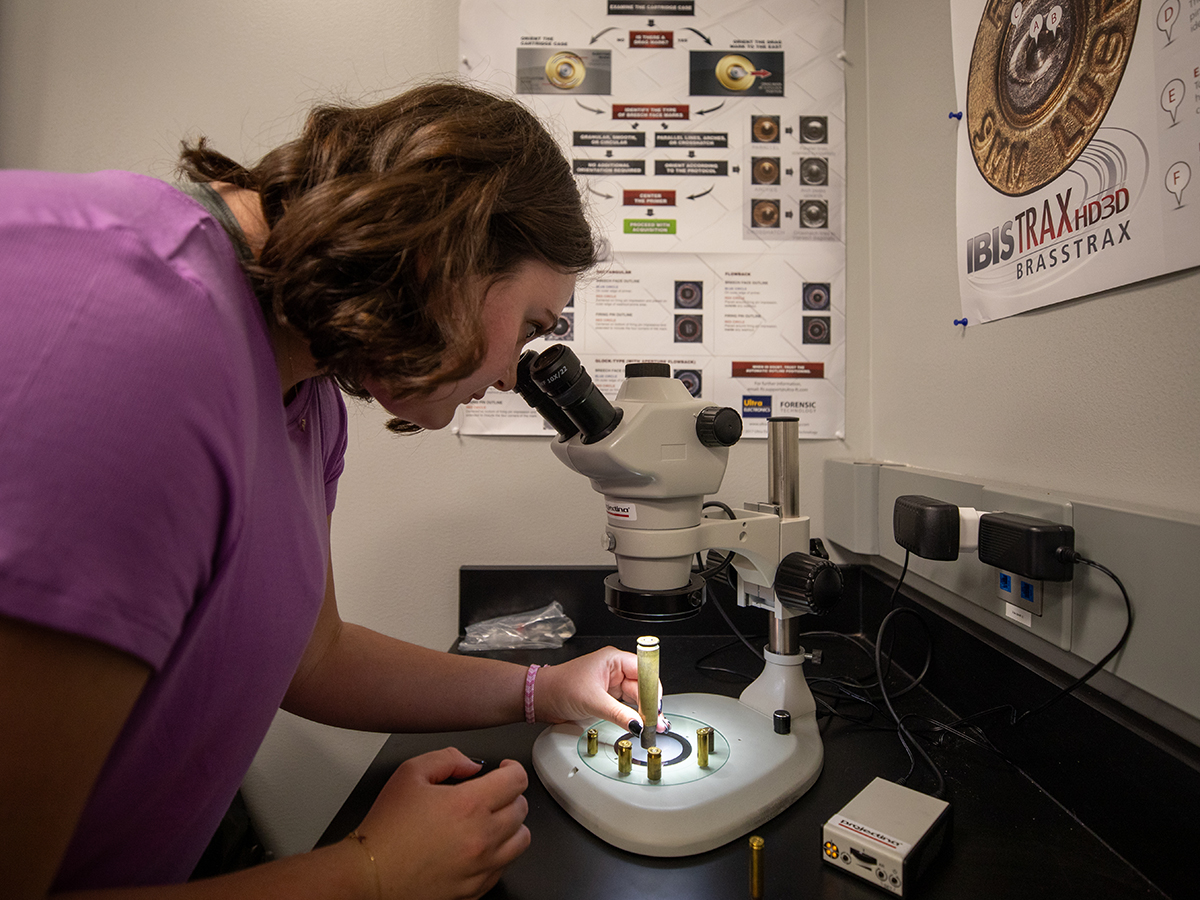
The MS in forensic firearms addresses a shortage of examiners nationwide — a niche field focused on the scientific comparison of firearms, toolmarks and ballistic evidence. The program emphasizes the examination of shell casings, bullets and related evidence, rather than gunsmithing or firearm mechanics, said Kristin Brewer, executive director of the Midwest Criminal Justice Institute, director of the Gun Crimes Investigation and Intelligence Unit, and codirector for the Wichita Crime Gun Intelligence Center.
“It’s about evidence,” Brewer said. “There’s a real gap in the workforce, and agencies are looking for people who can walk into a lab with hands-on exposure and experience.”
The program offers three tracks:
- The traditional track is designed for students with degrees in criminal justice, forensic science or related disciplines.
- The trainee track is for individuals working as entry-level trainees in established firearms sections. Students who complete the National Firearm Examiner Academy can receive credit for prior learning.
- The firearms examiner track is reserved for recognized examiners who have already completed the national academy and want to finish the academic component or deepen their expertise.
Brewer said that by offering flexible pathways, Wichita State expects students from agencies across the country — from large metro departments to regional forensic labs — to train on campus for extended periods.
The MS in forensic biology centers on human transfer evidence, including advanced training in DNA and touch DNA, a rapidly expanding area of forensic investigation.
“ATF is very big on touch DNA,” Craig-Moreland said. “It’s one of the important elements of investigating a crime these days. A significant part of what these forensic biologists will learn is advanced skills for DNA examination.”
The program’s development aligns with federal investment in Wichita’s growing forensic ecosystem, including ATF’s Office of Science and Technology and Wichita State’s Molecular Diagnostics Lab facility. Brewer said shared equipment and training opportunities will strengthen applied learning for students.
About Wichita State University
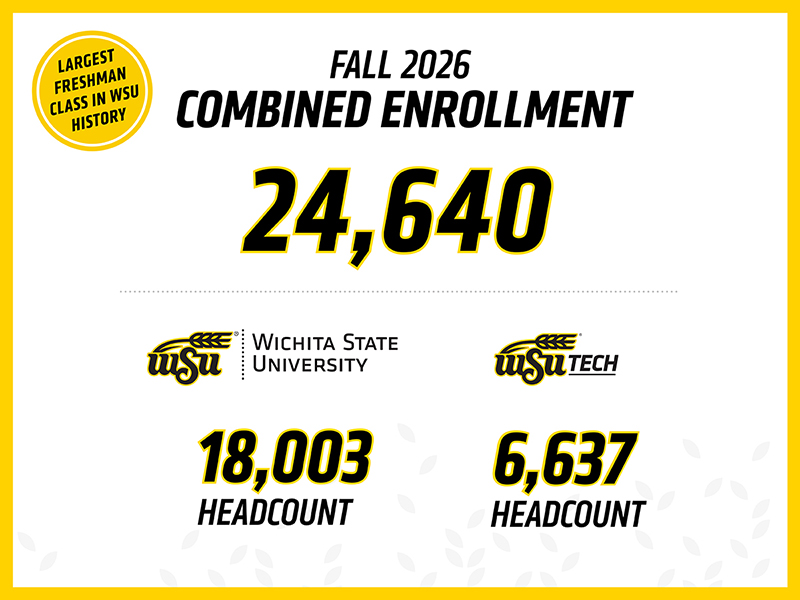
Wichita State University is Kansas' only urban public research university, enrolling more than 25,000 students between its main campus and the WSU Campus of Applied Sciences and Technology (WSU Tech), including students from every state in the U.S. and more than 100 countries. Wichita State and WSU Tech are recognized for being student-centered and innovation-driven.
Located in the largest city in the state with one of the highest concentrations in the United States of jobs involving science, technology, engineering and math (STEM), Wichita State University provides uniquely distinctive and innovative pathways of applied learning, applied research and career opportunities for all of our students. The National Science Foundation ranked WSU No. 1 in the nation for aerospace engineering R&D, No. 2 for industry-funded engineering R&D and No. 8 overall for engineering R&D.
The Innovation Campus, which is a physical extension of the Wichita State University main campus, is one of the nation’s largest and fastest-growing research/innovation parks, encompassing over 120 acres and is home to a number of global companies and organizations.
Follow Wichita State on social media: