 Paul Suellentrop
While many factors help student retention, Samantha Corcoran’s favorite is fostering curiosity. She likes to ask her students: “Do you love learning? Do you love going new places?”
“We’ve chosen to focus on increasing student curiosity in everything that we do,” says Corcoran, associate engineering educator in the College of Engineering.
Wichita State University’s First-Year Seminar “Introduction to Technology and Innovation,” and Shocker Design Experience are producing impressive retention increases. Freshman persistence has increased to 80% from fall 2024 to fall 2025. That's a 14% increase since the program was updated in 2021.
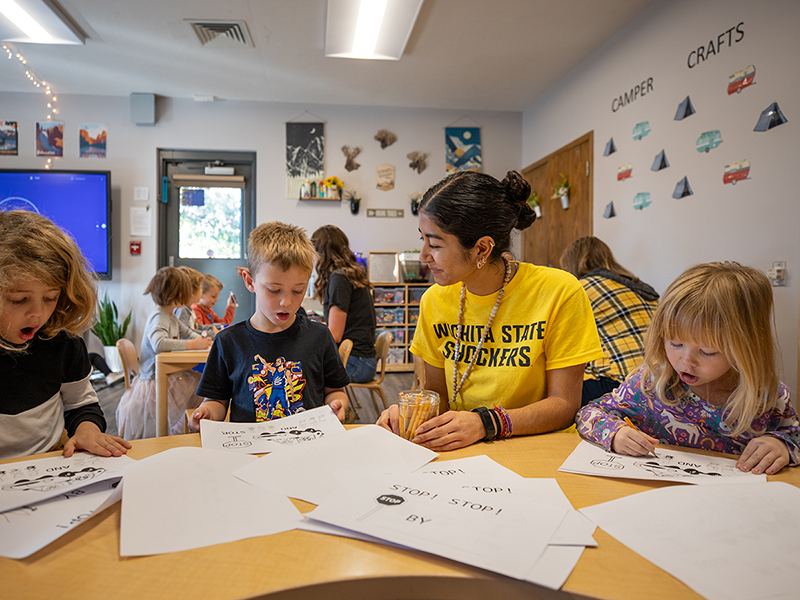
After completing the “Introduction to Technology and Innovation,” in the fall semester, students can choose to continue with a hands-on, applied project course in the spring for Shocker Design Experience. They design and build a working prototype of their “big idea,” using WSU’s Project Innovation Hub and GoCreate, a Koch Collaborative makerspace. Project teams compete in the Koch Innovation Challenge.
Twelve peer mentors, working in paid applied learning positions sponsored by donors, guide students through the seminar and Shocker Design Experience projects.
Associate engineering educator
This design thinking course focuses on fostering an entrepreneurial mindset and developing curiosity. A key component is learning that failure can be the first step toward success.
“Freshman year, our project went through so many different iterations, it was insane,” said Maya Douglas, a junior from Dallas, who is majoring in mechanical engineering. “It was cool to see all these different ideas and say ‘That’s crazy. That’s not going to work.’ And then a random, throwaway idea, it was like, ‘That might work.’”
Corcoran is the program lead for the Shocker Design Experience, a program for first-year students from every major, housed in the College of Engineering. The program is fully sponsored by Koch and other donors.
“This class was a great way to get plugged into a group,” Douglas says. “The biggest part for me was the whole design process. I’ve always been interested in making things. But I didn’t know all the things that went into it.”
SDX started in 2021 to update an introduction to engineering class that surveyed engineering disciplines.
“It wasn’t really interdisciplinary,” Corcoran said. “When we changed in 2021 to Shocker Design Experience, part of that change was to scale up and serve more students. We went from maybe 130 students across five instructors to 350 students.”
Program activities during the seminar are designed to let the students experience disappointment. Because social media is so prevalent, Corcoran says, she finds students hesitant to take on difficult tasks because the prospect of struggling on video is unappealing.
Corcoran and co-instructor Janelle Birkner are researching the relationship between curiosity and persistence and presented their paper, “A Multi-tiered Strategy to Increase Freshman Retention,” in June 2025 at the American Society of Engineering Education (ASEE) in Montreal.
“If we put them through an activity and it shows them that they can come back from failure, and failure is not the end, they will be more likely to try something harder in the future,” Corcoran said.
Students take a survey at the start of the semester to establish their curiosity level. After months of trials and successes, they take the same survey again.
“The last few years, all five indicators of curiosity have increased,” Corcoran said. “That’s why we propose our retention is high. We’re lowering their stress level when they try new things so that they know it’s not dangerous. It’s safe. It’s good to try new things. Especially with engineers – failure is an important way to learn.”
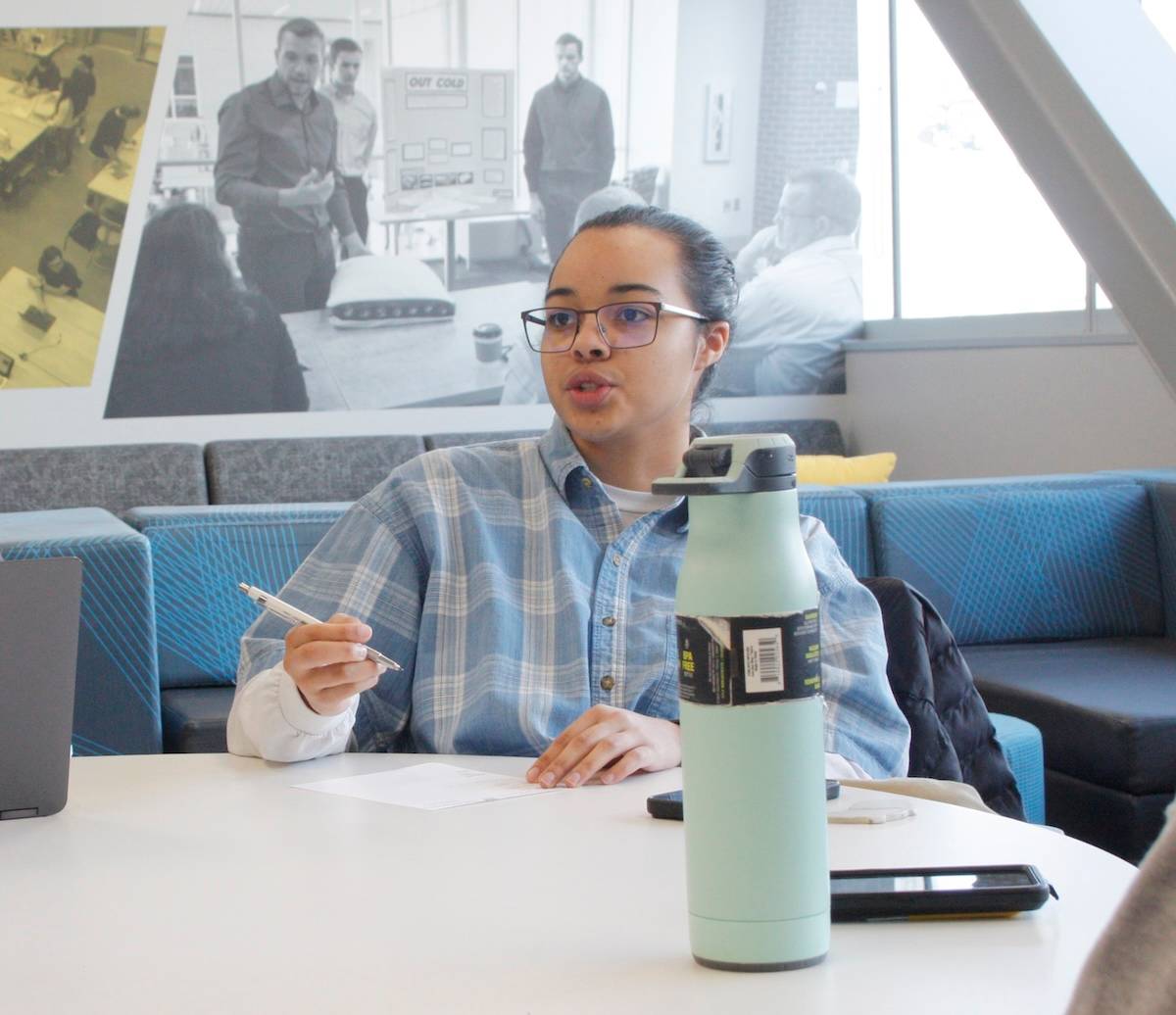
Douglas’ group pitched a stamping process to make the ADA-compliant areas on crosswalks easier and cheaper to install and maintain. She carried a self-inking stamp in her backpack for 18 months while working on the project.
The team, which also included Georgia Bacher, Elian Laguna, and Tanzeem Nabi, won the 2023-24 Koch Innovation Challenge.
For Douglas’s award-winning project and hundreds of others, students cultivate a spirit of active curiosity, learning to apply the critical inquiry needed to solve messy, real-world problems for customers and industry partners. And it’s this curiosity skillset that helps students persist to graduation and beyond.
About Wichita State University
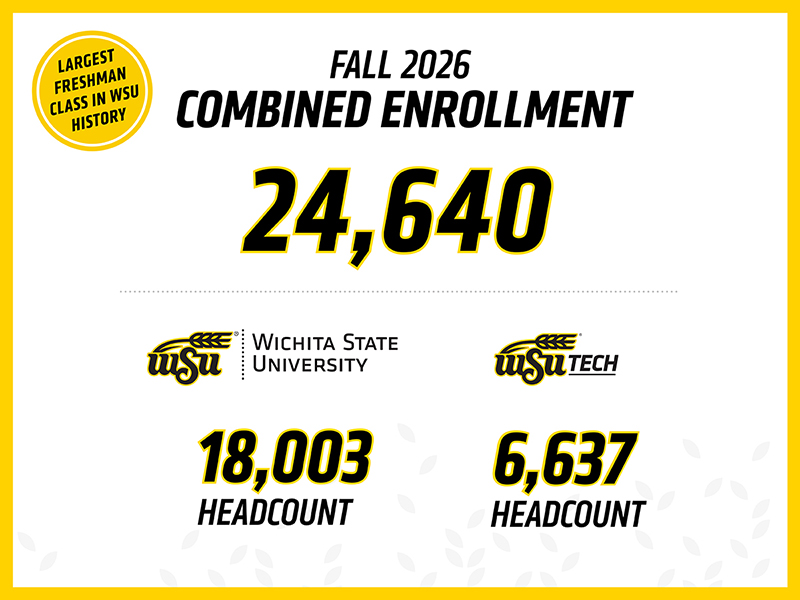
Wichita State University is Kansas' only urban public research university, enrolling more than 25,000 students between its main campus and the WSU Campus of Applied Sciences and Technology (WSU Tech), including students from every state in the U.S. and more than 100 countries. Wichita State and WSU Tech are recognized for being student-centered and innovation-driven.
Located in the largest city in the state with one of the highest concentrations in the United States of jobs involving science, technology, engineering and math (STEM), Wichita State University provides uniquely distinctive and innovative pathways of applied learning, applied research and career opportunities for all of our students. The National Science Foundation ranked WSU No. 1 in the nation for aerospace engineering R&D, No. 2 for industry- and defense-funded engineering R&D and No. 9 overall for engineering R&D.
The Innovation Campus, which is a physical extension of the Wichita State University main campus, is one of the nation’s largest and fastest-growing research/innovation parks, encompassing over 120 acres and is home to a number of global companies and organizations.
Follow Wichita State on social media: