

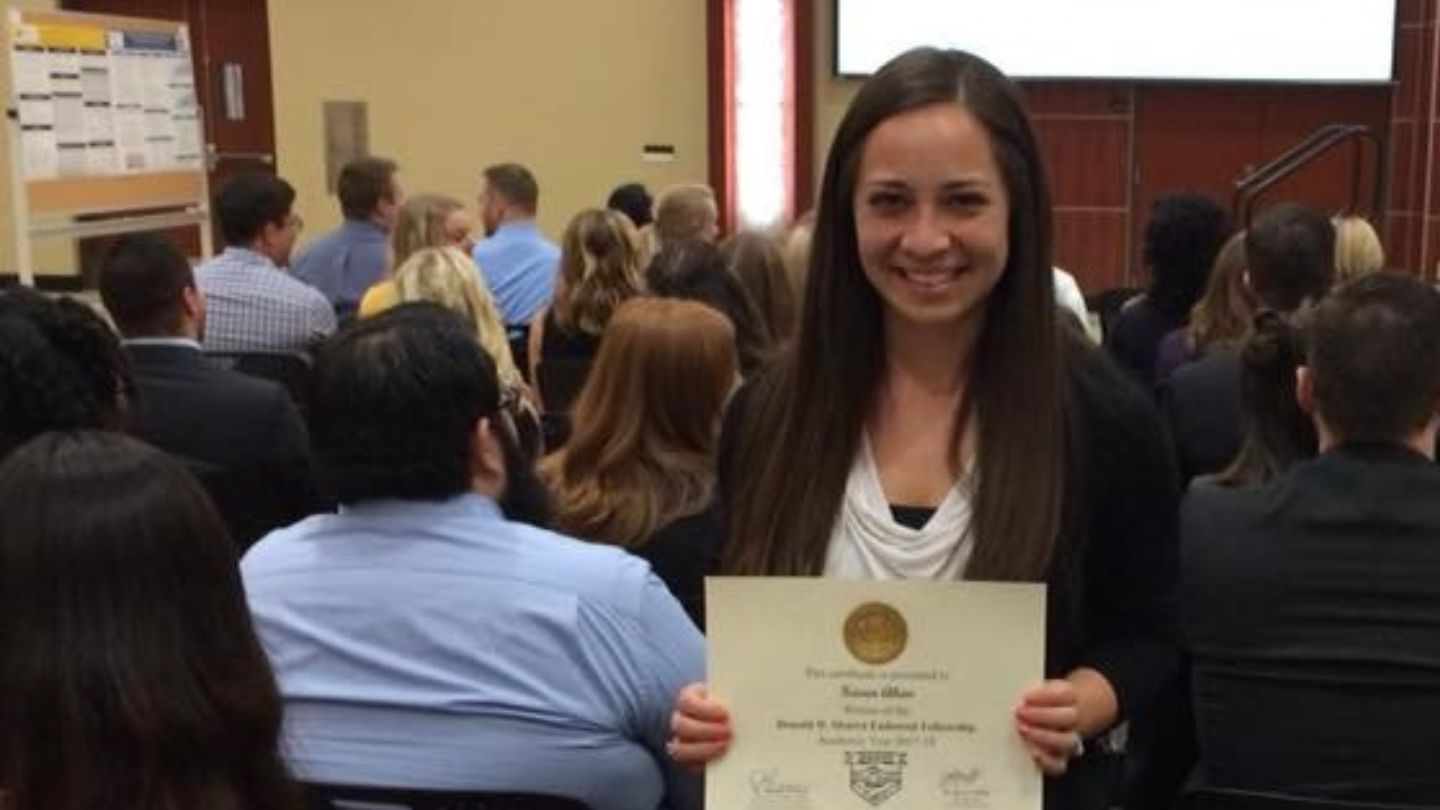

What is GRASP?
Each spring, the WSU Graduate School holds the Graduate Research and Scholarly Project (GRASP) symposium with the purpose of:
- Spreading awareness on campus about the state-of-the-art research and scholarly projects being conducted on campus
- Showcasing innovative graduate research to the wider community
- Highlighting the participation of graduate students in research/projects and recognize their contributions of their fields
- Recognizing research mentoring of the faculty advisors
- Providing a forum for graduate students to practice presentation skills in research and scholarly activities
GRASP 2026 Schedule
8:00 AM - Poster presenters check-in (Woolsey Hall 1st floor) and set up posters. Oral presenters and judges for oral presentations check in (Woolsey Hall 2nd floor)
8:00 - 8:10 AM - Coffee Break (Woolsey Hall 2nd floor)
8:15 - 10.45 AM - Oral presentations (Woolsey Hall 225, 233 and 234)
10.30 AM - Poster judges check in (Woolsey Hall 135)
11:00 AM - Students ready to present posters (Woolsey Hall Atrium and Fidelity Ball Ballroom)
11:00 AM - 1:00 PM - Judging (Woolsey Hall Atrium and Fidelity Bank Auditorium)
1:00 PM - Judges dismissed for lunch (Woolsey Hall Auditorium)
1:00 - 1:10 PM – Students pick up posters and go for lunch (Woolsey Hall Auditorium)
1:10 - 2:00 PM – Keynote presentation and lunch (Woolsey Hall Auditorium)
2:00 - 2:30 PM - Awards ceremony (Woolsey Hall Auditorium)
2027: April 9
2028 : April 14
Applying for GRASP
Graduate students from any WSU department are eligible to apply to participate in the annual Graduate Research and Scholarly Projects (GRASP) symposium.
All applicants must submit an abstract of their research by February 20, 2026. Students need to fill out the registration form first and then submit their their abstract via email. Detailed directions are provided below, under "Submit your abstract".
Your abstract should reflect the standards in your field. To accommodate this, we have two abstract templates that you should choose from. Consult with your advisor to make sure you are using the best template for your field. Remember that the overall GRASP audience will not be experts in your field.
Abstract templates are available at the WSU Graduate Research Intranet and also here (WSU ID required).
The recording of this presentation is available at the WSU Graduate Research Intranet (WSU ID required).
- "Abstract Writing", by Christine Freak, co-author or Abstracts and the Writing of Abstracts
If you are looking for general inspiration or want to see what others have done in the past, you can review previous years' abstracts in University Libraries' SOAR database.
Students must work with their advisor in the application process and when preparing their abstracts and posters. Make sure you speak with your advisor before submitting your abstract
Please note that the person who submit the proposal will receive all communications from GRASP. It will be their responsibility to forward information to co-authors.
- SUBMISSION CLOSES FEBRUARY 20 AT 11:59 PM
Abstracts must be submitted via email as a Word Document. We cannot accept PDFs or
other formats. Please email your abstracts to gs3@wichita.edu.
Please use this naming convention: Last name, first name, "GRASP 2026" (e.g., DoeJaneGRASP2026.doc).
Please use the abstract templates available at the WSU Graduate Research Intranet and here (WSU ID required).
Please follow the directions included in the template.
Thanks!
The Editorial Board will review the abstracts and select participants.
Abstracts will be published in the Shocker Open Access Repository (SOAR).
Preparing for GRASP
After your abstract has been accepted and you have confirmed your intent to participate, we will reach out to you via email regarding submission of your final abstract and providing information about the GRASP event.
- Abstract submission January 22 - February 20, 2026
- Notification of acceptance March 9, 2026
- Posters due to printers by April 10, 2026
- Final abstracts and advisor's review due by April 17, 2026.
- April 24, 2026 GRASP Symposium in Woolsey Hall.
Posters may be no larger than 36 x 48 inches. There are no exceptions to sizing. If your poster is too large, you may not be able to participate. GRASP will provide tacks for posters--you need only bring your poster to the event.
You are responsible for getting your poster printed. We encourage you to seek funding support from your advisors, program, department, etc. Posters should be submitted to Shocker Printing Solutions by April 10, 2026 to ensure it is ready in time for the symposium.
Be prepared to give a 3-5 minute oral summary of your project to the judges. After your summary, judges may ask you questions about your project. Remember, judges will come from all areas of the University, so your poster and summation should be directed to a general audience.
- Clear design starts with clear thinking!
- Keep in mind that most people (and judges) viewing your poster are not experts in your field.
- A well-organized and succinct poster is more likely to grab the audience's attention. A crowded, complicated, difficult-to-read poster will be passed by for an easy-to-read, well organized poster.
- Be consistent: font size and style, alignment of text and graphics, fond size change on bullet levels, grammar and punctuation (e.g., sentence tense, use of periods), etc.
- Use a pleasing color scheme and make your text, graphics, tables, and pictures stand out form the background. Make sure to balance white space and text to avoid clutter and emptiness.
- Less=more
- Use high-resolution, readable graphics, tables, and pictures that are properly labeled to eliminate text and make your poster more visually appealing. Do not use 3-dimensional graphs.
For excellent advice on preparing a poster, see Designing Conference Posters by Colin Purrington.
Poster templates and videos are available at the WSU Graduate Research Intranet and here (WSU ID required).
The recording of this presentation is available at the WSU Graduate Research Intranet (WSU ID required).
- "Giving Poster Presentations", by John Bond, author of The Little Guide to Giving Poster Presentations.
March 31, 3:30 - 4:30 PM, "How to Create a Research Poster" -by WSU Librarians Meghann Kuhlmann and Fional Holly. In person (Ablah Library) and also online (with registration). Register here.
Check-in: Please check in at the Graduate School check-in table in Woolsey Hall 2st floor before 8 AM. Your presentation will be either in Woolsey Hall 225, 233 or 234. According to the current schedule, presentations start at 8:15 AM, and there will be two rounds of sessions: one from 8:15 to 9:30 AM and the other 9:30 to 10:45 AM. We will email you again once the schedule is finalized.
Time limit: You will have 10 minutes for your presentation. A timekeeper will help you manage your time using countdown signs. There will be a 5-minute warning, a 3-minute warning and a 1-minute warning. The 3-minute warning is a reminder to conclude findings and start your closing remarks. The 1-minute warning indicates that time is almost up and that you should share your final thoughts immediately. If the timekeeper indicates that your time is up, you are expected to stop talking.
Visuals: You may use visuals, such as a PowerPoint presentation. Please email us to wsugradschool@wichita.edu your PowerPoint presentation on or before Monday, April 13. If you use any other slideshow software (such as Canva, Prezi, Google Slides, LibreOffice, Keynote, etc.), in the interest of time we ask that you please save or convert your presentation to PowerPoint format.
Technology: Each session room is equipped with a computer, LCD projector, HDMI cable, and a clicker.
Q&A: We'll allocate time for questions after the presentation. Be prepared to answer concisely and professionally.
Presentation expectations: Judges will score your presentation using a rubric very similar to the one used for poster presentations Please note that judges in most cases will not be experts in your field. The goal of GRASP is to make your presentation understandable for a non-expert audience.
Awarding ceremony: Winners will be announced during the awarding ceremony (currently scheduled from 2-2:30 PM, Woolsey Hall Auditorium).
Poster Presentations: We will invite poster presenters to attend your oral presentation. Likewise, you are invited to attend the poster presentations in Woolsey Hall 1st floor, currently scheduled from 11 AM to 1 PM.
IELC can review presentations and provide support:
- Coaching to make oral presentations more effective
- Design advice
- Editing to improve word choice and clarity
Students are strongly to attend prep sessions before to having their posters printed.
Note: One of our participants won second place in GRASP 2025
Email: ielc.lab@wichita.edu
Want to judge poster presentations? Sign up here.
At the GRASP event in April, both oral and poster presentations will be judged and winners will be awarded prizes.
This is the rubric used for poster presentations.
| Criteria and performance levels |
Significant Weaknesses |
Good but some flaws |
Very good, only minor flaws |
Outstanding |
|---|---|---|---|---|
|
Poster is well organized and easy to follow. |
||||
|
Relevant background/context of the project is presented. |
||||
|
Research methodology is well explained. |
||||
|
Results are easy to interpret. |
||||
|
Spoke, clearly, at a steady pace, and at a good volume. |
||||
|
Avoided scientific jargon and explained discipline-specific terminology. |
||||
| Presentation made the research understandable for those outside the presenter's discipline. | ||||
|
Presentation is engaging for people outside the presenter's discipline. |
||||
| What is your overall impression of this presentation? | ||||
| Point Total |
This is the rubric used for oral presentations.
| Criteria and performance levels |
Significant Weaknesses |
Good but some flaws |
Very good, only minor flaws |
Outstanding |
|---|---|---|---|---|
|
Thesis is stated clearly and specific, appropriate examples are presented. |
||||
|
Relevant background/context of the project is presented. |
||||
|
Research methodology is well explained. |
||||
|
Results are easy to interpret. |
||||
|
Spoke, clearly, at a steady pace, and at a good volume. |
||||
|
Avoided scientific jargon and explained discipline-specific terminology. |
||||
| Presentation made the research understandable for those outside the presenter's discipline. | ||||
|
Presentation increases audience's understanding of knowledge of topic. |
||||
| What is your overall impression of this presentation? | ||||
|
Presentation was completed in aproximately 10 minutes (if not, deduct 1 or 2 points) |
||||
| Point Total |