


THE WORLD CHANGED.
SO SHOULD AN INNOVATION DEGREE.
AI can generate ideas, analyze information, write software and increasingly take action.
That changes what it means to be an innovator.
The advantage now belongs to people who can identify the right problems, understand human needs, recognize opportunities, work across disciplines and orchestrate people, AI and technology to create meaningful value.
That's what MID is designed to develop.
PEOPLE + SKILLS + TECHNOLOGY + AI
DON'T JUST LEARN INNOVATION. DO IT.
FIND
Research people, systems, industries and unmet needs.
BUILD
Turn opportunities into physical, digital and AI-enabled prototypes.
TEST
Put ideas in front of users, challenge assumptions and iterate.
ORCHESTRATE
Design how people, AI agents, technology and organizations work together.
CREATE VALUE
Move promising solutions toward implementation, adoption or launch.
FOUR SEMESTERS. ONE PROGRESSION.
SEMESTER 1
Find the Right Problem
Human-centered design
Agile product management
User research
Collaboration
Complex problem solving
AI collaboration
SEMESTER 2
Build the Solution
Experimentation
Product development
UX
Technical foundations
Prototyping
innovation leadership
SEMESTER 3
Build the System
Agentic AI
Vibe coding
Advanced prototyping
XR and emerging technology
Sustainable teams
Human + AI workflows
SEMESTER 4
Create Value
Product launch
Industry implementation
Organizational adoption
Innovation project
Professional portfolio
MID Curriculum at a Glance
To complete the Masters of Innovation Design degree, you must complete a total of
30 credit hours.
Up to 6 hrs can come from Innovation in Practice and an additional 6 hrs can come
from Project.
You can also choose other graduate courses from disciplines across campus, not listed
below.
Design Thinking is a human centric approach to complex problem solving. Learn the wholistic Design Thinking process, Design Sprints, and Service Design Thinking ideal for creating and improving products, services, processes and organizations.
- ID 513 Design Thinking and Facilitation – learn to utilize and facilitate the human centered design thinking process of empathy, define, ideate, prototype, test to innovate creative solutions for complex problems including new product development and societal issues. Additionally, learn how AI can speed up the process. This 16 week course covers the design thinking process, design sprints, and service design thinking.
- ID 514 Lean UX Challenges - Combine design thinking and Agile product management concepts to create a practical prototype for local sustainability and societal challenges.
Learn how to apply empirical processes in a distributed team environment - Agility is more than a process, it's a mindset.
- ID 511 Agile Product Management - prepare for integration into a professional Agile product development environment. You will learn how to collaborate within a product team, establish an Agile product development workflow, estimate solutions effort and cost, and learn to fail gracefully.
- ID 705D Agile Software Development - don't just learn to code, learn to develop products. Develop the technical skills necessary to excel in a cross-functional, distributed team environment using Agile software development techniques.
Start applying traditional concepts in sustainability to complex problems in innovation for a holistic approach.
- ID 514 Lean UX Challenges - Combine design thinking and Agile product management concepts to create a practical prototype for local sustainability and social equity challenges.
- ID 719 Collaborative XR Development - An advanced course designed to give students practical guidance in the design, development, testing, and delivery of extended reality (XR) applications mirroring a real-world product team experience.
Start applying traditional concepts in sustainability to complex problems in innovation for a holistic approach.
- ID 509 Applied Sustainability in Innovation - participate in thoughtful discussion on sustainability, adoption of sustainable practices and policies, and employ hands-on analysis of the long-term sustainability of innovation solutions.
- ID 720 Sustainable Teams & Organizations - assess and discuss the long-term sustainability of different management approaches in individual, team, and organizational settings.
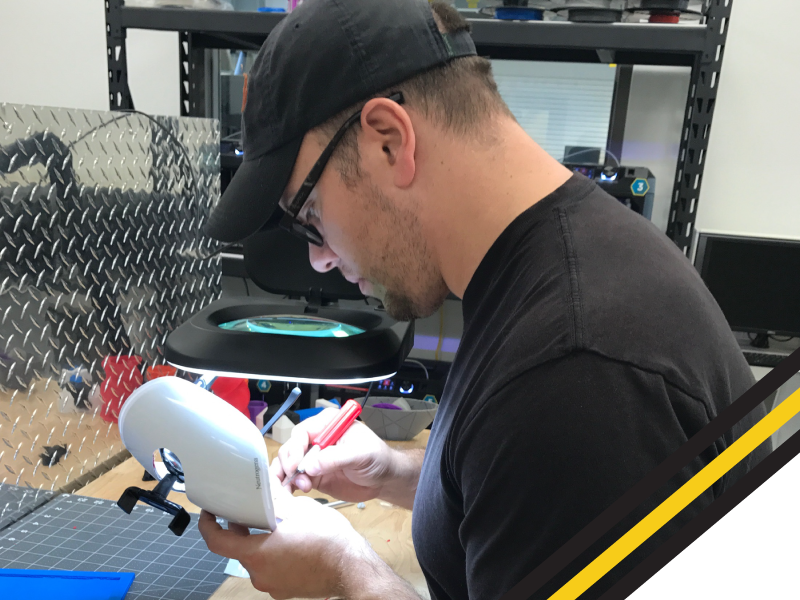
Going from an idea to fully developed physical or digital prototype - you will be able to SHOW your idea, not just talk about it.
- ID 752 Innovation Studio I - Apply the design sprint process to a series of innovation prompts from industry partners to solve real world complex problems and develop an innovative prototype of the solution.
- ID 755 Innovation Studio II – Learn the product development using Artificial Intelligence (AI) by tackling a single complex industry problem utilizing the design sprint process, prototype your idea, validate with users, iterate, and present a final solution.
- ID 509 Leadership Development for Innovation: All businesses are technology driven organizations. In this course you will learn business and digital fluency, develop a digital mindset, build a strategy and vision, build buy-in for change, mitigate risk, utilize Artificial Intelligence (AI), and evaluate technology for impact.
- ID 753 Intent vs Impact - Explore the impact of unintended consequences, fraud, governance, and general ethics has on an organization and it's culture. Plus, examine case studies and discuss the need for AI ethics within an organization. Learn the EOS system for building accountability into the organization and better decision making through data.
- ID 830 Emerging Tech: Travel Experience - Discover the latest in technologies from around the world through a travel experience. Past destinations have include NEOCON furniture show in Chicago and the Consumer Electronics Show (CES) in Las Vegas.
- ID 839 Emerging Technologies - Explores new technologies including Artificial Intelligence (AI) that are impacting industry and society. The course meets weekly to discuss the technology's impact, evolving industry uses, and what issues or concerns may be present. The course is enhanced with technology experts and industry leader presentations on the development, uses and concerns of emerging technologies.
- ID 840 Innovation in Practice - Built around experiential enrichment related to the broad topic of innovation. Topics such as intellectual property, branding, pitching, wire-framing, prototyping and funding are discussed in a group setting and may include guest speakers and/or visits to local companies.
- ID 841 Project - An independent study course for students undertaking the project development/creativity option for completion of the Master of Innovation Design.
VIEW ALL COLLEGE OF INNOVATION AND DESIGN COURSES
Masters of Innovation Design FAQ's
What is a Master of Innovation Design?
The Master of Innovation Design (MID) at Wichita State University is an interdisciplinary graduate degree that prepares professionals to solve complex problems, lead innovation initiatives, develop new products and services, and help organizations adapt to rapid technological change—including the growing impact of artificial intelligence (AI).
Unlike a traditional graduate degree focused on a single discipline, MID brings together principles from design thinking, business strategy, human-centered design, technology, research, leadership, and product development. Students learn how to understand customer needs, identify opportunities, develop innovative solutions, test ideas quickly, and communicate recommendations that create real value.
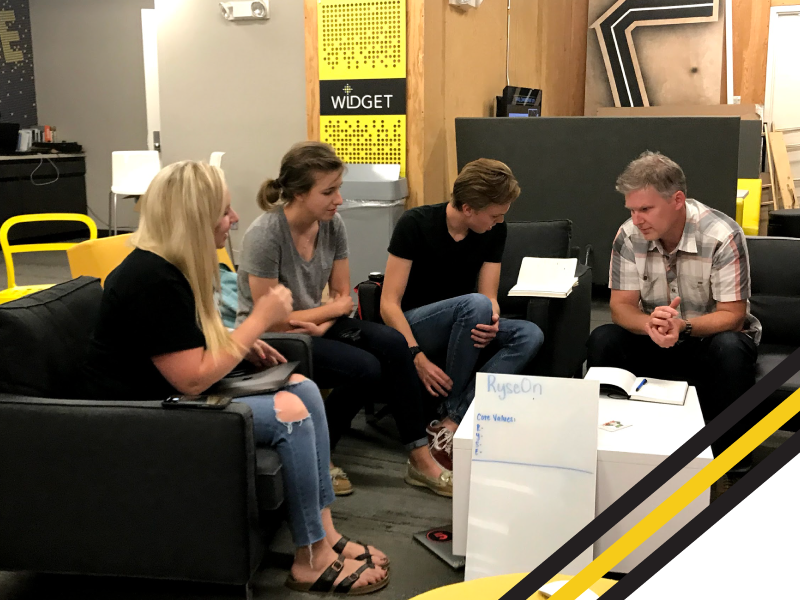
Throughout the program, students work on projects with industry partners, collaborate with classmates from diverse professional backgrounds, and build a portfolio demonstrating their ability to solve real-world challenges.
Whether you want to lead innovation within an established organization, launch a startup, transition into UX or product management, or become an AI-enabled leader, the MID program is designed to help you build the skills employers increasingly value.
The Master of Innovation Design is designed for curious problem-solvers who want to create meaningful change in their careers and organizations.
Our students come from many different backgrounds, including:
- Engineering
- Business
- Healthcare
- Education
- Manufacturing
- Marketing
- Information Technology
- Graphic Design
- Communications
- Government
- Military
- Entrepreneurship
Some students are recent college graduates looking to differentiate themselves in a competitive job market. Others are experienced professionals seeking leadership opportunities, preparing for career advancement, or transitioning into entirely new industries.
If you enjoy asking questions, improving systems, creating new ideas, working with people, or solving problems that don't have obvious answers, the MID program may be an excellent fit.
The most successful students aren't defined by their undergraduate major—they're defined by their curiosity, willingness to learn, and desire to make an impact.
Both.
The MID program intentionally brings together students at different stages of their careers because diverse experiences strengthen collaboration and learning.
Recent graduates gain exposure to experienced professionals who share real-world insights and industry perspectives.
Experienced professionals benefit from fresh ideas, new technologies, and emerging ways of thinking introduced by younger classmates.
The result is a learning environment that mirrors today's workplace, where innovation depends on collaboration across generations, disciplines, and professional backgrounds.
Whether you're beginning your career or have decades of experience, you'll find opportunities to contribute and grow.
What careers do MID graduates pursue?
Graduates of the Master of Innovation Design (MID) program pursue careers where innovation, leadership, customer insight, technology, and strategic thinking intersect. Rather than preparing students for a single occupation, the program develops versatile professionals who can solve complex problems, lead multidisciplinary teams, and drive meaningful change across industries.
Many graduates work in areas such as:
- Product Management
- User Experience (UX) Design and Research
- Innovation Management
- Customer Experience (CX)
- Digital Transformation
- Business Strategy
- Service Design
- Research and Development
- Project and Program Management
- Organizational Change
- Entrepreneurship
- Consulting
Because innovation is needed in virtually every industry, MID graduates have opportunities in aerospace, healthcare, manufacturing, finance, education, government, technology, nonprofit organizations, and startups.
The degree prepares students to become the people organizations rely on when they need new ideas, improved processes, better customer experiences, or innovative solutions to complex challenges.
Innovation careers often have different titles depending on the organization, but many align closely with the skills developed in the MID program.
Common job titles include:
- Innovation Manager
- Product Manager
- Product Owner
- UX Designer
- UX Researcher
- Service Designer
- Customer Experience Manager
- Human-Centered Design Specialist
- Design Strategist
- Innovation Consultant
- Business Innovation Manager
- Digital Transformation Manager
- Program Manager
- Research & Development Manager
- Strategy Consultant
- Organizational Development Manager
- AI Innovation Lead
- Experience Designer
- Change Management Consultant
If you're searching job boards, consider keywords such as innovation, strategy, customer experience, design thinking, product management, digital transformation, AI, and human-centered design. These positions frequently seek professionals who can combine creativity with business and technology.
Artificial intelligence is reshaping nearly every profession, but organizations still need people who know how to apply AI strategically, ethically, and effectively.
The MID program prepares students to work alongside AI rather than compete against it. Students learn how AI can enhance research, idea generation, customer discovery, decision making, product development, and innovation while recognizing where human judgment, creativity, empathy, and leadership remain essential.
Throughout the program, students gain experience using AI as part of their innovation toolkit. They learn to ask better questions, evaluate AI-generated information, identify bias, and integrate AI into collaborative workflows.
Rather than training AI programmers, MID develops AI-enabled professionals—leaders who understand how to leverage emerging technologies to create value for customers and organizations.
As AI becomes part of everyday work, employers increasingly seek graduates who can combine technological fluency with human-centered problem solving. That's where MID graduates stand out.
For many professionals, earning a Master of Innovation Design is less about changing jobs and more about expanding opportunities within their current organization.
Employers increasingly promote individuals who can:
- Lead cross-functional teams
- Manage change effectively
- Solve complex organizational challenges
- Think strategically
- Drive innovation
- Improve customer experiences
- Introduce new technologies responsibly
- Facilitate collaboration across departments
The MID curriculum develops exactly these capabilities.
Students also strengthen communication, leadership, presentation, and strategic decision-making skills that prepare them for management and executive responsibilities.
While no graduate degree guarantees a promotion, the knowledge, confidence, and portfolio developed through MID position graduates to take on greater leadership responsibilities and contribute at a higher organizational level.
An MBA teaches students how to manage existing businesses. A Master of Innovation Design teaches students how to create what's next.
While there is some overlap in leadership, strategy, and organizational thinking, the two degrees have different primary focuses.
An MBA typically emphasizes:
- Finance
- Accounting
- Operations
- Economics
- Marketing
- Organizational Management
The MID program emphasizes:
- Human-Centered Design
- Innovation Strategy
- Design Thinking
- Product Development
- Customer Discovery
- Agile Product Management
- User Experience
- Emerging Technologies
- Artificial Intelligence
- Systems Thinking
If your goal is to manage existing operations, an MBA may be the better fit. If your goal is to create new products, improve customer experiences, lead innovation, or help organizations navigate rapid change, the Master of Innovation Design offers a unique combination of business, design, technology, and leadership.
Many organizations increasingly value professionals who can imagine and implement the future—not simply manage the present.
User Experience (UX) is an important part of innovation, but it represents only one component of the MID program.
A traditional UX graduate program typically focuses on:
- User research
- Interaction design
- Information architecture
- Interface design
- Usability testing
The MID program includes these concepts while expanding into broader areas such as:
- Innovation Management
- Product Strategy
- Business Models
- AI and Emerging Technologies
- Leadership
- Design Thinking
- Organizational Change
- Service Design
- Product Development
- Cross-functional collaboration
Students interested in UX gain valuable research and human-centered design skills while also learning how UX fits into product strategy, innovation, and business decision making.
This broader perspective often prepares graduates for leadership roles beyond traditional UX positions.
Innovation is no longer confined to technology companies.
Organizations across nearly every industry seek professionals who can improve products, services, customer experiences, and organizational performance.
MID graduates work in industries including:
- Aerospace and Aviation
- Healthcare
- Manufacturing
- Financial Services
- Technology
- Education
- Government
- Energy
- Consumer Products
- Retail
- Logistics
- Defense
- Consulting
- Nonprofit Organizations
- Entrepreneurship
Innovation has become a competitive necessity, making graduates valuable wherever organizations face changing customer expectations, technological disruption, or increasing competition.
Because the program emphasizes transferable skills rather than industry-specific knowledge, graduates have flexibility to pursue careers across multiple sectors.
Yes.
Leadership is one of the defining characteristics of the Master of Innovation Design program.
Innovation leaders do more than generate ideas—they create environments where ideas become reality.
Throughout the program, students learn how to:
- Lead multidisciplinary teams
- Facilitate creative collaboration
- Navigate uncertainty
- Build support for new ideas
- Manage organizational change
- Balance customer needs with business goals
- Evaluate emerging technologies
- Develop innovation strategies
Students gain repeated opportunities to practice leadership through team projects, presentations, industry collaborations, and applied problem solving.
Graduates leave not only with innovation tools but also with the confidence to guide organizations through change.
Absolutely!
Entrepreneurs face constant uncertainty. Success depends on understanding customers, validating ideas quickly, adapting to feedback, and building products people truly want.
These principles are at the heart of the MID curriculum.
Students learn how to:
- Identify unmet market needs
- Conduct customer interviews
- Validate business concepts
- Build prototypes
- Test assumptions
- Develop innovation strategies
- Present ideas to stakeholders and investors
- Use AI to accelerate research, ideation, and market analysis
Equally important, students learn that innovation is an iterative process. Rather than investing heavily in untested ideas, they learn to experiment, gather evidence, refine solutions, and reduce risk before scaling.
Whether your goal is to launch a startup, introduce a new product within an existing company, or build a consulting practice, the MID program provides practical tools that help transform ideas into successful ventures.
The Master of Innovation Design (MID) program prepares you to solve complex problems, lead innovation initiatives, and create products, services, and experiences that improve people's lives. Rather than focusing on a single discipline, the curriculum combines design, business, technology, leadership, and artificial intelligence to help you become a well-rounded innovation professional.
Throughout the program, you'll learn how to:
- Identify customer and user needs through research
- Apply Human-Centered Design to solve real-world problems
- Use Design Thinking to generate and evaluate ideas
- Manage innovation projects using Agile methodologies
- Develop product and service strategies
- Facilitate creative collaboration across multidisciplinary teams
- Communicate ideas through storytelling and visualization
- Integrate AI into research, analysis, and innovation workflows
- Evaluate emerging technologies and market trends
- Lead organizational change and innovation initiatives
Most importantly, you'll learn how to think differently. The curriculum emphasizes curiosity, experimentation, systems thinking, collaboration, and continuous learning—skills that remain valuable regardless of how industries or technologies evolve.
By graduation, you'll have built a portfolio of applied projects that demonstrate your ability to tackle real organizational challenges.
Employers increasingly seek professionals who can do more than perform technical tasks—they want people who can adapt, collaborate, innovate, and lead through change.
The MID curriculum develops many of the skills organizations identify as essential for the future of work, including:
Innovation & Leadership
- Innovation strategy
- Creative problem solving
- Leadership
- Change management
- Strategic thinking
- Decision making
Human-Centered Skills
- Design Thinking
- Human-Centered Design
- Customer research
- User Experience (UX)
- Customer Experience (CX)
- Facilitation
- Empathy
Technology & AI
- Artificial Intelligence literacy
- AI-assisted research
- AI-enhanced productivity
- Emerging technology evaluation
- Digital transformation
- Technology strategy
Business Skills
- Product Management
- Agile Product Management
- Service Design
- Market opportunity analysis
- Business model innovation
- Communication
- Presentation skills
Collaboration
- Team leadership
- Cross-functional collaboration
- Stakeholder engagement
- Conflict resolution
- Innovation workshops
Because these skills apply across industries, graduates are well prepared for careers in business, healthcare, engineering, government, manufacturing, technology, education, consulting, and entrepreneurship.
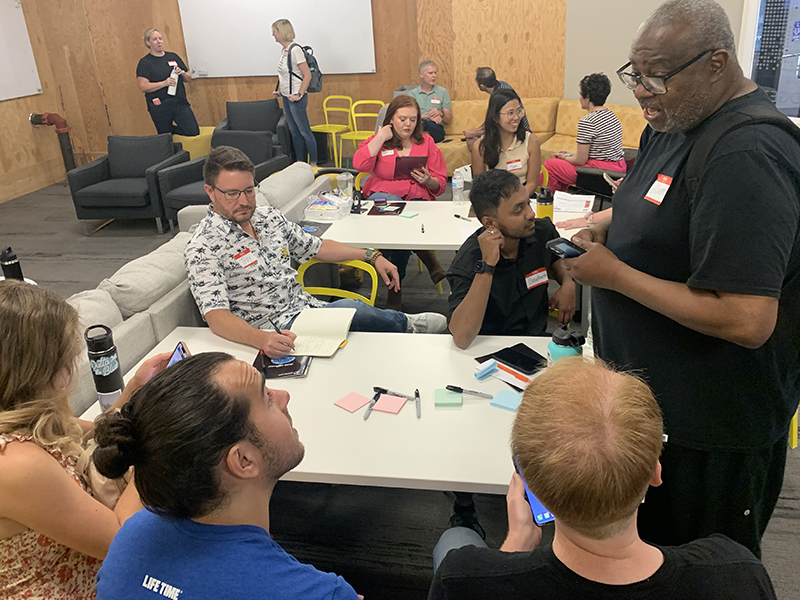
Yes. One of the defining characteristics of the MID program is its strong emphasis on applied learning through industry collaboration.
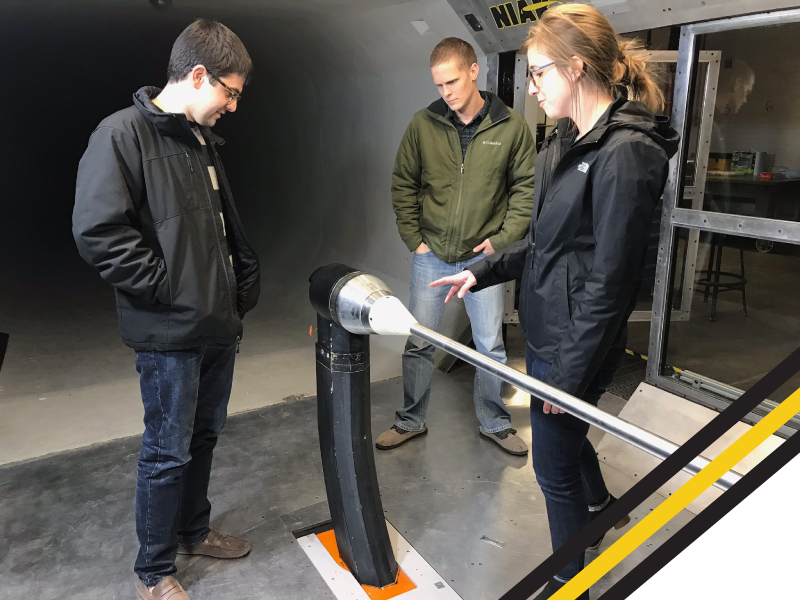
Many courses incorporate projects sponsored by businesses, government agencies, nonprofit organizations, or community partners. These projects challenge students to solve authentic problems rather than hypothetical classroom exercises.
Working with industry partners allows students to:
- Address real organizational challenges
- Present recommendations to professionals
- Receive feedback from clients and stakeholders
- Understand organizational constraints
- Build professional networks
- Gain experience employers value
These experiences help students graduate with practical knowledge and a portfolio that demonstrates their ability to create value in real-world settings.



Request Info from The College of Innovation and Design
All Links Below This Line of Text will take you to the Wichita State Admissions page.
If you want to speak to someone from The College of Innovation and Design or Masters
of Innovation Design program, click one of the links above.