

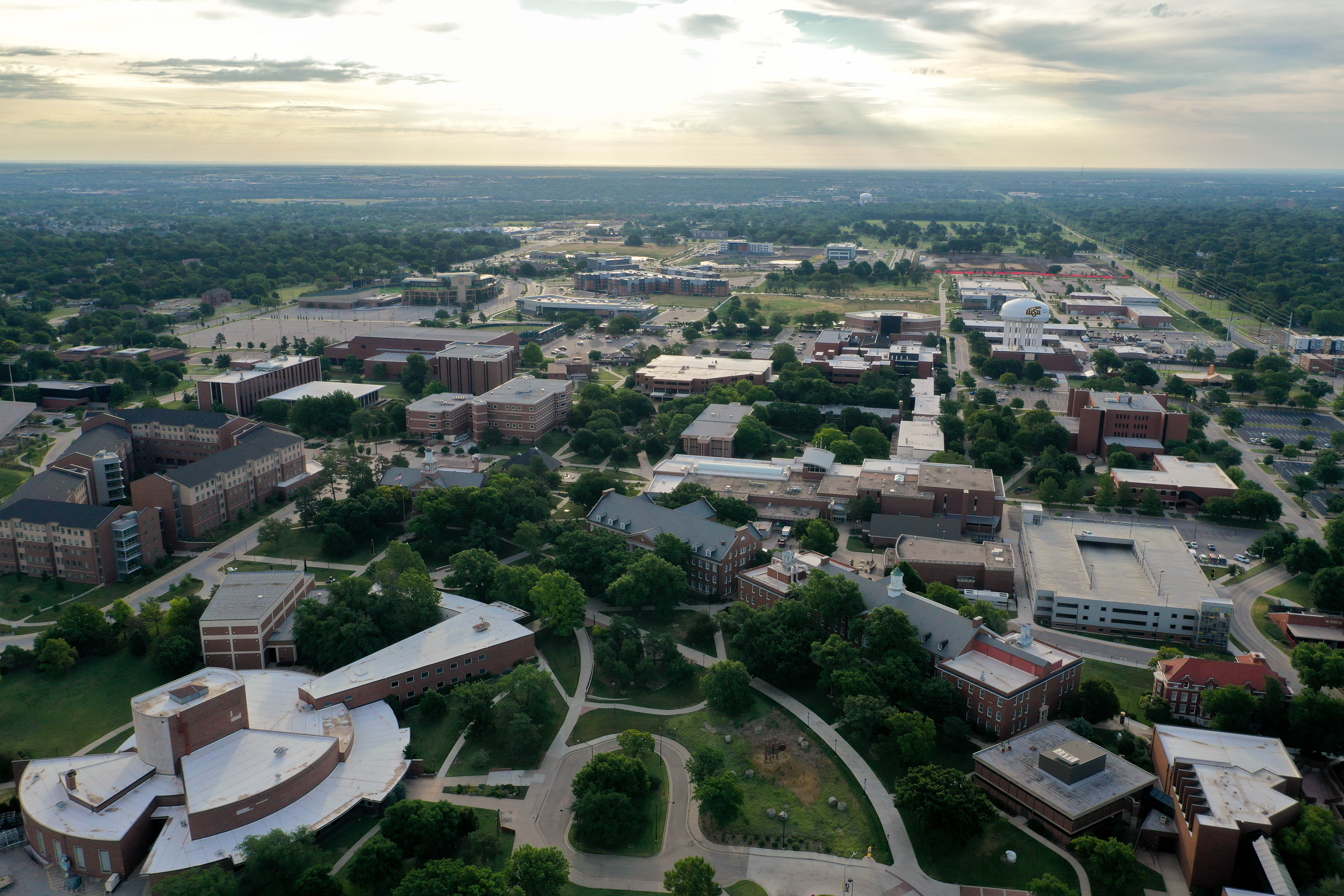
Besides academic activities, the Aerospace Engineering department and faculty are responsible for a substantial amount of research. Much of this work is conducted collaboratively with industry and government. The theoretical, computational, experimental, and applied research efforts fall generally into the following areas: Aerodynamics, Fluid Mechanics, Aircraft Structures, Solid Mechanics, Composites, Materials, Flight Mechanics, Controls, Simulation and Astrodynamics.
Department Labs and Faculty Research
Departmental Labs
Advanced Aerospace Materials Lab
The Advanced Aerospace Materials Lab is equipped with 3D printers for manufacturing architected materials for aerospace applications. This facility is used exclusively for the design and construction of small airplanes, models or apparatus.
Flight Structures Lab
The Flight Structures Lab provides for advanced structural testing of materials, components and prototypes. Students get hands-on experience conducting tests using top-notch equipment, instruments and methods.
Low-Speed Wind Tunnel
The 3-foot by 4-foot Low-Speed Wind Tunnel is an experimental facility in the Department of Aerospace Engineering. It is an atmospheric, open return, closed-throat, subsonic wind tunnel, and there are two testing sections available.
Faculty Research Interests and Activities
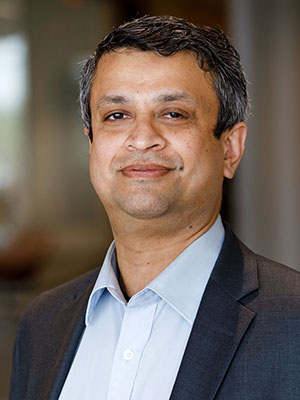
Dr. Atri Dutta
Research interests include astrodynamics, control theory, mission design and optimization.
Specific topics include the following:
- Optimal orbital transfers using a novel description of spacecraft translational dynamics
- Maneuver planning for aerospace system
- Space situational awareness (maneuver detection, uncertainty propagation)
- Space mission analysis for geocentric (all-electric telecommunication satellites) and heliocentric (neutrino detector) missions
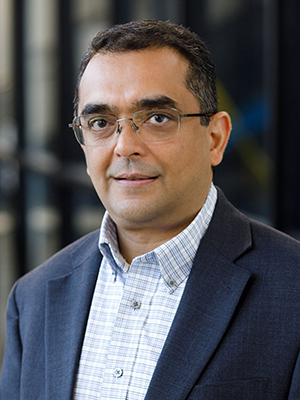
Dr. Suresh Keshavanarayana
Chair and M.S. Program Coordinator
Research interests include aircraft structures/solid mechanics/composites.
Current/recent research includes the following:
- In-plane Elasto-Plastic charaterization of composite materials
- Post-peak stress degradation measurement for composite materials
- Hyperelastic material modeling and characterization of elastomers and honeycomb cores.
- Dynamic characterization of composite materials
- Scaling effects on the tensile strain rate sensitivity of composite materials
- Load signal modulation in dynamic tension and shear tests
- Evaluation of FE fastener modeling techniques for airframe crash simulations
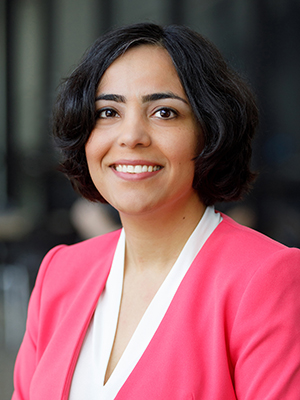
Dr. Nadia Kianvashrad
Assistant Professor
Research interests include computational aerodynamics, hypersonic flows, computational shock wave laminar and turbulent boundary layer interactions, unsteady aerodynamics, non-equilibrium hypersonic flows, energy deposition for flow and flight control, higher-order methods for computational fluid dynamics, automated design optimization using computational fluid dynamics, reduced order modeling of high-speed flows, and theoretical fluid dynamics with particular emphasis on the solution of engineering problems.
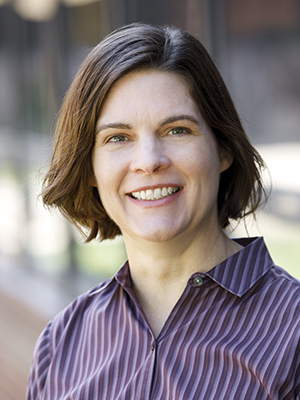
Dr. Linda Kliment
Associate Professor & Director of NASA in Kansas
Research interests include applied aerodynamics and flight mechanics.
Current/recent research includes the following:
- Experimental investigation of wake vortex filaments. Dynamics and stability of the vortex are studied.
- Operational flight loads data is collected for a variety of aircraft. The usage information and flight loads are analyzed.
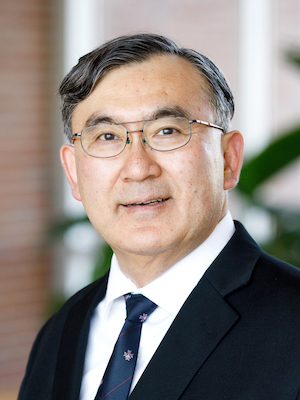
Dr. Roy Myose
Teaching interests include biofluid mechanics, astrodynamics, aerodynamics, propulsion, and engineering mechanics.
Current/recent research includes the following:
- Low-Reynolds number cascade aerodynamics
- Blood flow in aorto-coronary bypass CFD models
- Engineering education
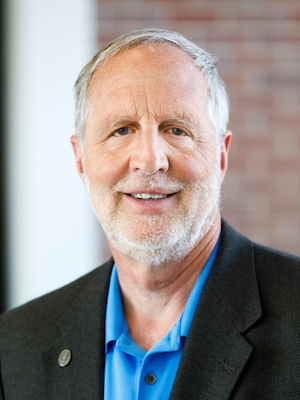
Dr. James Steck
Research interests include aircraft flight controls, artificial neural networks, quantum computing, flight simulation, and acoustics.
Current/recent research includes the following:
- Integrated resilient adaptive aircraft control for general aviation
- Structural health monitoring of aircraft
- Health monitoring of wind turbines
- Lightning protection of composite aircraft
- Quantum neural computing and quantum learning
- EEG (brainwave) control of aircraft

Dr. Charles Yang
Research interests include solid mechanics, mechanics of materials, mechanics of advanced composite materials, and adhesively bonded joints.
Current/recent research includes the following:
- Bonded repair of composite airframe laminate and sandwich structures
- Characterization of adhesive properties for the development of progressive damage growth analysis
- Analysis of composite scarf-patch-repair
- Finite element analysis of structures